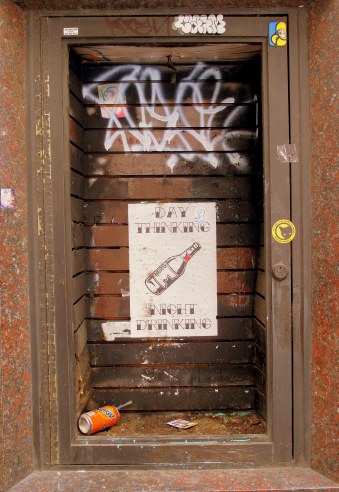
Addiction, Art, Imagination, Freedom

Maps cells words.JPG

Such freedom as we have, arises out of the generative power of imagination and dreams, which change the shape of our interactive world to make room for us to act out decisions made before we are aware we have made them. Everything in this movement is indirection. We are able to choose to follow a path, only as we are able to imagine it into existence. These are words which describe how that feels to me.

In the morning, I think–I’ve come to the end of what I budgeted for wine this month. I think I’ll not buy any more until the next Social Security deposit–or until I sell another painting, but by some time in the afternoon, this resolve undergoes a change, I can feel it happen: I will finish a painting I like, and want a glass of wine for a reward. I begin to prepare dinner, and think, how good it would be to have a glass of wine with this marinara–and I go to the wine & spirit store, and buy that nice, inexpensive Tisdale Pinot Noir that I like.

What is an addiction, but our body partnering with the source of the addiction to hinder our ability to imagine ourselves without it, as in mourning the loss of one we have deeply loved, we are for a time–even for a lifetime–unable to imagine our lives without them? Imagination is of the body, our body inescapably hooked into the world.
I can, to some degree, give myself to imagining–but always indirectly, by doing something else. Writing a poem, making a painting, the making, what I am doing– choosing pigments and brushing color on the canvas–becomes that ‘something else,’ as I work. When this happens, when I finish–what I’ve made becomes a wonderment, something I had not known I had imagined until it is there before me. The opposite of perfectly completing a task I’ve planned out from the beginning–unless the planning, all along, has itself been the foil. If the painting doesn’t surprise me when I finish it–it feels like a failure. I feel like a failure. As though I had betrayed a job I’d been entrusted do.

“Free will,” as most commonly expressed, is an illusion. I think most of us, most of the time, are but instruments of the machines we have made and set in motion to act in our place, and those who appear to have the most power, are the least free, unconscious servants of the Machinery of Money and Death.

What will free us from this addiction?
Anarchy, Black History, Excess… and hope

images.jpg

There’s an invaluable lesson we can learn from the history of black people in this country. Counter to many distopic movies–which play on the assumption that need, and scarcity of resources will set people against one another. An idea planted as a seed of capitalist ideology–by the elite’s fear of the people, fear of real democracy.
 
But if we look a their history, we see how black people, survived by mutual aid, preserving what what was possible to preserve, and so much more– creating a new culture, new music, new art. A history that refutes that dytopic fear. The Lord of Flies fear.
 
If there is violence in impoverished neighborhoods now, it’s not scarcity, but excess that is to blame–the seductive promise of excess wealth and power, the omnipresent propaganda absorbed by living in and under a consumer capitalist driven ideology.
 
Poor people learn how to take care of one another–or they die.
 
The greater the wealth, the more that ability deteriorates. The billionaire elites are damaged–and damaged in ways that puts human survival itself at risk. The disposition that motivates mutual care, is lost. Excess corrupts… and at some point, corrupts absolutely. John Woolman understood this. Few have understood it better.
 
I’m not setting up an argument for the virtue of poverty. That’s not the conclusion I draw. But I am making an argument for the corrosive power of excess, where some have more than they need, and many have less. We have enough food and material wealth to house and feed every person on the planet–and much more. The problem is, and has been since the first neolithic farmers cultivated grains and rice, that could be stored and accumulated, and did not need to be consumed as it was harvested, how to use the excess… other than providing the means for kings and priests and war lords to rule over the lives of others… invariably, over the ones who produced the excess.
 
The problem didn’t begin with capitalism. Capitalism systematized and automated and dehumanized the machinery that had been at work since the first cities in China, the Indus valley, the fertile crescent.
 
What starting me thinking about this, was watching a neighbor caring for an invalid aunt and grandmother.
 
We are good at this, we humans. It isn’t scarcity that is destroying us, but excess… and how to deal with that without destroying those deep rooted communal habits we are so good at creating. Inequality is the symptom… a symptom that itself can destroy us. But there’s a deeper cause. Something we have never been able to learn.
 
I think that the anarchists… some of them, began to get this.
 
I think that’s our way to the future… if we’re to have one.

Abstraction as a political choice

Once you understand the history of this country–whole shelves of American fiction, and great collections of American painting, become unbearable.
I think about this when I try to understand my almost exclusive turn to abstraction, and my resistance to representative art–even though that’s what my education prepared me to do.
It’s not my call to portray the lives of black people, or “first nations’ ( I like the Canadian term), and I don’t see any crying need to paint white people! Abstraction for me embodies a voice of resistance, of protest. Both a choice, and an act of self denial: a rejection of the world I see around me. A turn to landscape, or nature painting is no better–simply another kind of denial… unless I painted toxic dumps, industrial wastelands. I lean in that direction with my Recyclations (trash assemblages).

#692

60.9 x 60.9cm  Acrylic on canvas. With abstract work, I think more in terms of structure, than composition. Ask–where are the bones? The interior scaffolding? Hearkens back to the pleasure I found when I was a boy–from around 7 to 10 years old, playing with a set of building blocks. They were the architectural wood blocks, large blocks of different sizes and shapes: pillars and arches and cubes.  I would build odd configurations, cantilevered extensions balancing asymmetrical columns that grew like crystals or organisms. When I thought about, “structure,” this is what came to mind (cont below).

#692.JPG
View my web portfolio here ART BY WILLARD
For photos on this blog:CLICK HERE, and scroll down.

Much of what I do is like that–extensions of how I would play when I was alone: building structures with stones and sticks and rusted cans, watching water running down the curbs and imagining the patterns as rivers as though seen from a great height–imaginary landscapes. I felt no connection between making art, and how I had played as a child, until I began making assemblages in the Ox.
A new insight… how it happened, that it all came bubbling out of me at that moment when it became for me, again…  pure play… and what had stopped by progress so many years ago. It wasn’t, as I’ve explained to myself, that I was afraid I didn’t have the talent, or the ability; it was because there was a disconnect between what I thought of as, ‘art,’ and what I would do–how I would play when I was a child.
A realization that brings tears to my eyes. Like Proust… recovering lost time.

Juries, Judges, Trials and Errors

clark_ashton_smith_return_of_the_sorcerers Juries.

Something about juries been on my mind. A connection I can’t quite put my finger on.

The multiple voices that make up our One voice. Judgement. We stand in the dock waiting to be found innocent, or guilty. Waiting to be found out. To find ourselves in the voices we have made from ourselves… the selves we are searching for.

We (these are not the inventions of single minds) pull social and institutional forms out of our bodies, the body of our mind. Feeling in the dark for their form–the resemblance is in-bedded. They look like what we would look like if we could see.

So it’s not just the jury, is it? Kafka again. Echoes of our inner life… lives. Reification, bodied forth in multiplicity.

We were never One.

Dance the Revolution!

#433 Dance!.JPG

Think about how it would change the world, if we were to understand, and treat, music, dance, poetry, the arts, not as cost-deficit sidelines, to be cut from schools to make way for serious subjects, but as the reason and purpose for everything else we do!

We need to raise food, because we need food to give us pleasure, and to make art! We need shelter and housing, so we have places we can make music. We need medicine, to stay healthy so we can dance and make poetry!

Make life for pleasure, for deep pleasure, and it will change the world.

(#433 Acrylic on canvas Dance!)

Mother Love


Some mothers are more difficult than others for the humans pulled out of their bodies. At best, if we’re honest, it’s a mutual wound that never heals.

There is an element of violence in love–that can only be deferred, or displaced, but never erased. Sentimentalizing mother love is a lie against … if not nature… truth.

That doesn’t make love less important. It makes it more so. Love is the overcoming…no, not just the overcoming, the transformation–of violence. Violence is not the opposite of love… it the mother of love.

Two months short of 30 years since my mother’s death.

The dialogs we never had, return in dreams. So often in anger–resistance. To become whole and free in the world, we need to stand up against our parents, to assert our independence. But most of that need arose when we were too young to understand it for what it was.
 
I know that anger in my dreams, is directed at myself… for not knowing… at 3, at 12, at 18. This is what we carry through our lives. Reliving… what we can’t relive. In dreams. In fantasies. In rituals of self destruction.