Street Sketching and Territoriality

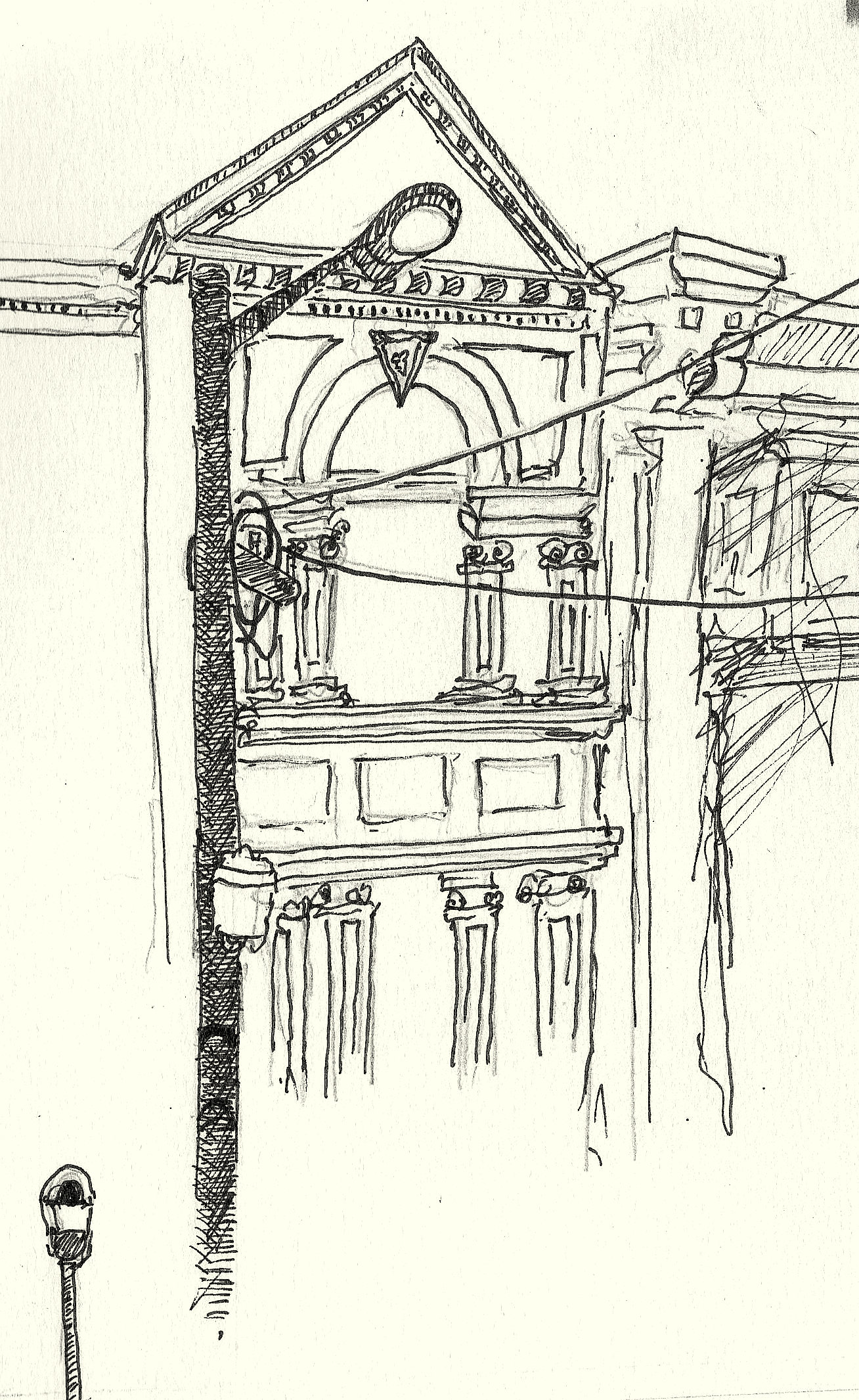
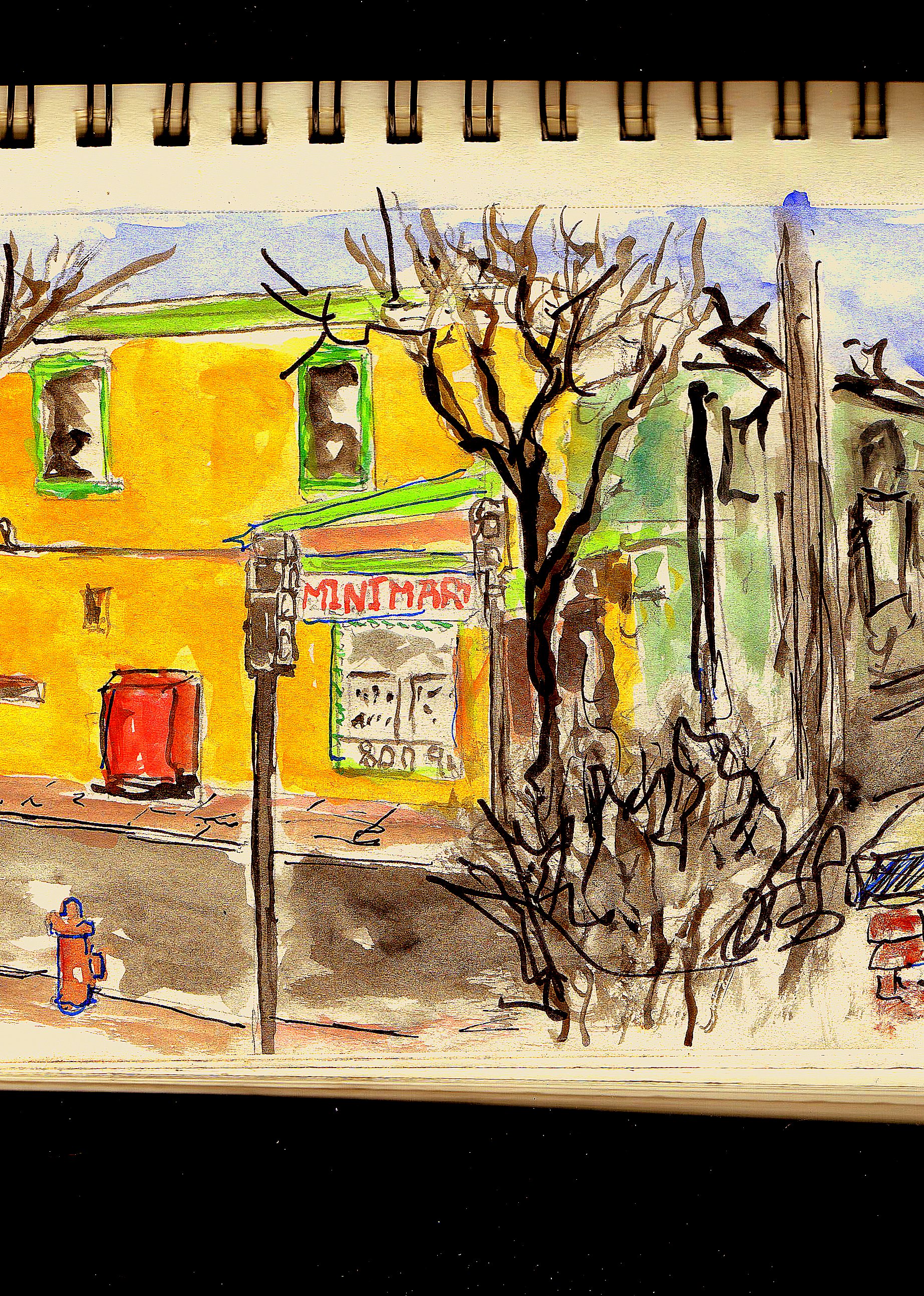
MiniMarketStreet sketching is a new thing for me.  I love how it brings my vision into focus–how I can lose myself for an hour or two in utter concentration. While I don’t think about more than what I’m doing while I work, I find that it stimulates so many questions, provokes my mind–no small part of what fascinates me, though some of those questions are troubling.

This is drawing from life. Being there. One of the things I’ve been thinking about, is how demanding this is, developing and perfecting skills, and yet, it’s not that alone. Like with figure drawing–there are comic artists who are superbly skilled at rendering human figure from imagination–think of the forshortened points of view of those superheros. Or illustrators… was looking at the cover of a book, a street of Philly row houses drawn from an acute angle,  all with ariel bays in perfect perspective.  You learn that well, and you can do it from imagination–maybe with the aide of photo references. I both respect and admire the skill, knowledge and facility of these artists, but that isn’t where I want to go, or what I find most interesting. There comes a point, a level of skill and knowledge, when one can draw on what has absorbed without further encounter of the kind of immediacy I want when I’m working from life. Robert Beverly Hale, the great teacher of anatomy and figure drawing summed up the learning process like this: “first you draw what you see, then you learn to know what you see, then you draw what you know.” But that leaves out the last, and most important step: returning to the subject you’ve learned, and seeing more. Beginning again that process of discovery–seeing ever more fully, more deeply. It’s possible for illustrators and cartoonists, to get to a point where they can coast on what they know–but they don’t have to. I look at the illustrations of Charles Dana Gibson, or cartoonists like Walt Kelley or Bill Watterson, who, even when using basic templates, never surrender to mere tracing of what they’ve done before. I’m not trying to distinguish between ‘high’ and ‘low’ art; I’m trying to understand something about process.
In street sketching, it’s not their technical mastery of perspective or penship–it’s that going back to the beginning that’s the life of those drawings– of those who do it well. There’s a freshness that I love, like coming across a scene for the first time–it’s a way of seeing… but this is where I begin to question what it is I’m doing. What else is going on here.
There’s a blog, Urbansketchers. org. You’ll find there work by many of the best. But you will also see another pattern… these are world travelers, who go to cities around the world, and draw… rather than taking snap shots… to see the world, one drawing at a time, I think is their phrase. While I love these drawings… I’m uncomfortable with them–with the conceptual framework that binds them. I can’t help but think of dogs… marking territories.
Vision… as a kind of ownership. A foreclosure, more than an opening. What we see–is territory, the ‘normal’ world of the capitalist tourist: this is beautiful … and ours. This is fascinating… and ours.  Not the possession of the artists, but of those they unconsciously, or at least, uncritically, serve. A theme-park world for the enjoyment of the power elite, and their upper echelon servants.

Court artists of the capitalist leisure elite.

I don’t like that–that I can’t escape this thought. I really do love this body of works. I aspire to it! To render such life in my drawings, my art!

But so much else about my art –about where I want to take it–is about escape–escaping the Master’s Hand and Voice, escaping the “Art System,” the capitalist gallery to investor universe of gatekeepers and Owners–finding my way to a revolutionary, ‘anti-art,’ in as much as so much of what we–what art history–defines as ‘Art,’ is but a captive of Euro-Patriarchal art making, colonizing the traditions of other cultures–serving the Masters.
Street sketchers stand on a border… I love that there is no pretense here of “higher art,” I love the individualism, the freedom expressed by these artists.. but I despair at what I see as ideological captivity. And I don’t know what to do… or what I would like these artists I admire, to do.
I only know that it’s a problem. And that you can’t solve any problem, without first seeing it, recognizing it, defining it for what it is.

Where is my community of believing dissenters?


Breaking free from the Art System

images

I want to post a second comment I left on CLCLARK’s blog on Luhmann’s system theory, Systems Serve only Themselves. This has been a concern of mine for some time, expressed in several previous posts.

I see several problems with art as an autopoitec system. The first being, that ‘art’ is an artificial construct. For this, it might be enough if it were more narrowly defined, say… “Euro/Anglo Art.” It’s been a project of art history to treat art as a universal—even while concentrating almost exclusively on European traditions until the assimilating of Japanese, Chinese, African and “primitive” styles by European artists forced the door open to the rest of the world. This greater inclusiveness, however, was more in the nature of colonizing the European idea of art as a universal, drawing on products, which, in their own cultures, served a wide range of activities, and were in no way part of something, neither their makers nor those  who these objects served, thought of as belonging to an autonomous system analogous to a Western idea of ‘art,’ a process not unlike the transformation imposed on European religious objects in the development of the idea (or system) of art in the West.

Also, as autopoitic systems are differentiated from their environment, but subject and responsive to outside perturbations, these responses can be absorbed in their development. With organisms, other forms can be physically absorbed and incorporated: viruses, mitochondria. The point I’d make here, is that what we mean by ‘art,’ is not just a system responding to other systems, but one—perhaps even more than any other—that has incorporated them into its DNA. The Western ‘art system’ co-evolved with capitalism, patriarchal institutions, hierarchical value coding, in such a way that these are more than external systems that use or perturb it, but are embedded in its generative structures.  This is what informs my question about finding a place as an artist—outside that system. Escape from the controlling subject: “Art.” Deteritorializaion from the master subject and its self-cloning powers. Thinking of Deleuze… escape from the root, to the rhizome!


Sometimes you fail…

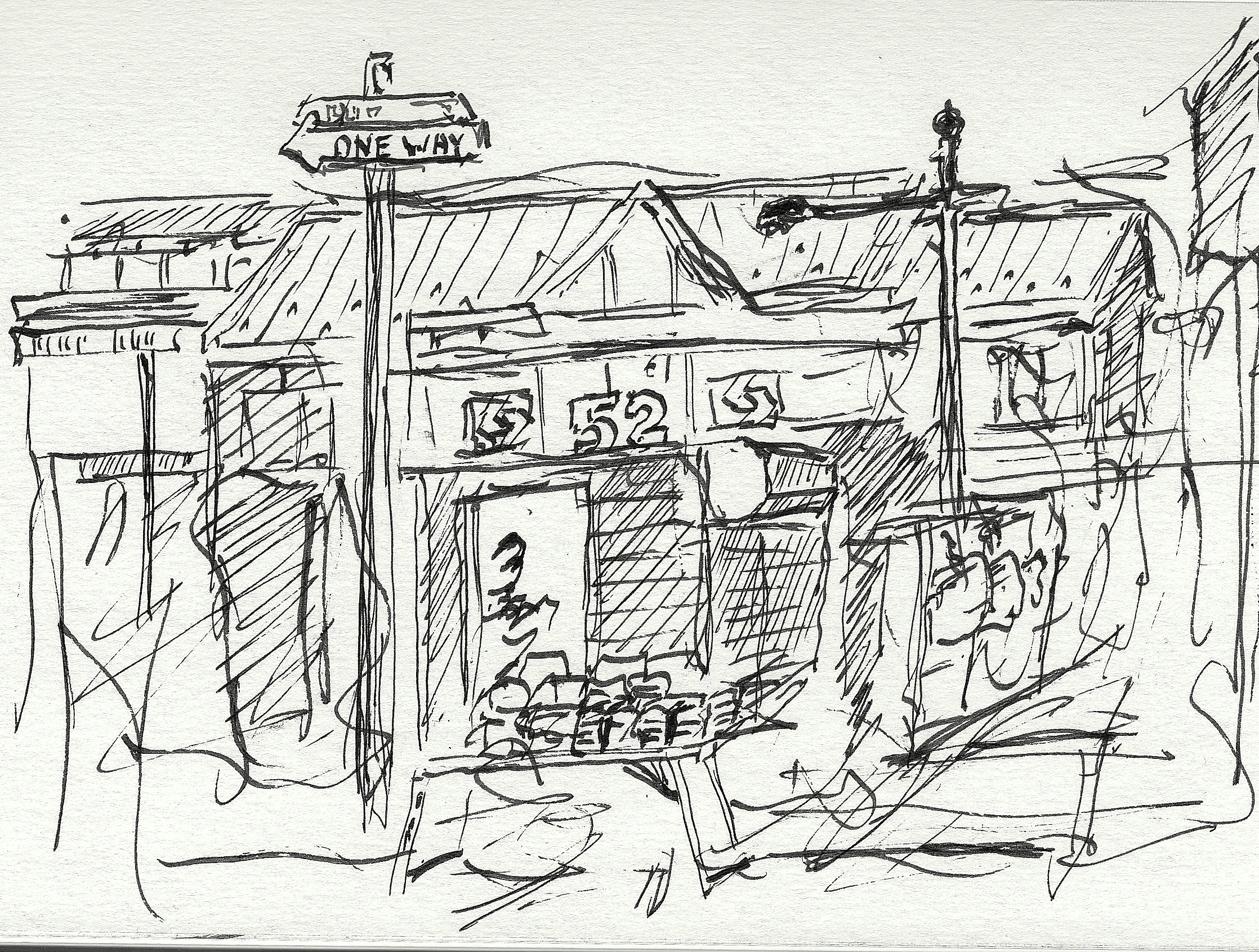
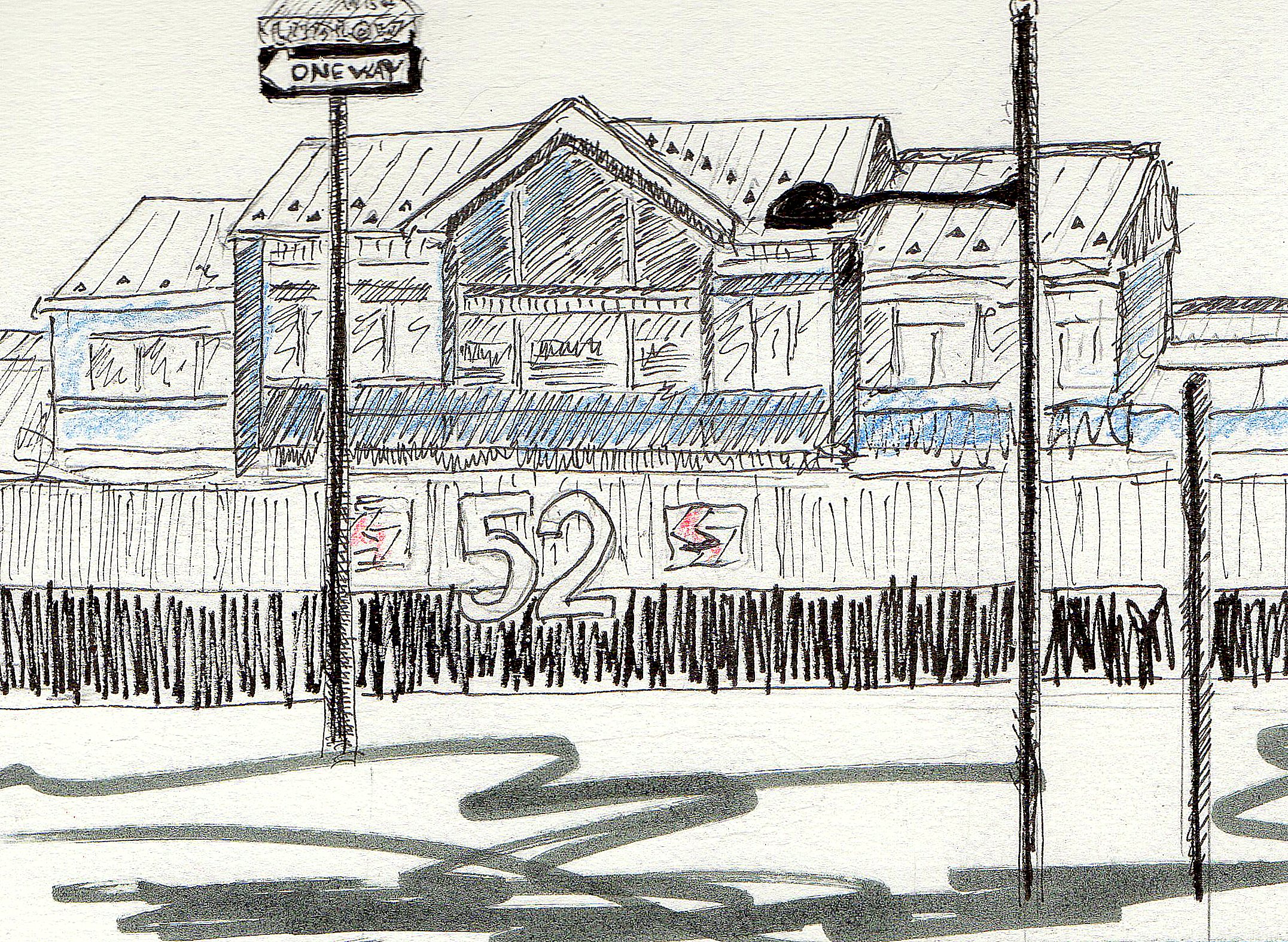
I had a good drawing… but pretty much ruined it. Paper (Canso: Sketch Esquisse Croquis) is not good for water color or wash, unless applied fairly dry for details. Stick with pencil for this sketch book. Get something better for more finished work. But it was a lovely day to spend a couple of hours in the warm spring sun!

Across the street from A-Space. Ink, water color.
Sketch across street from A-Space 5-8-16

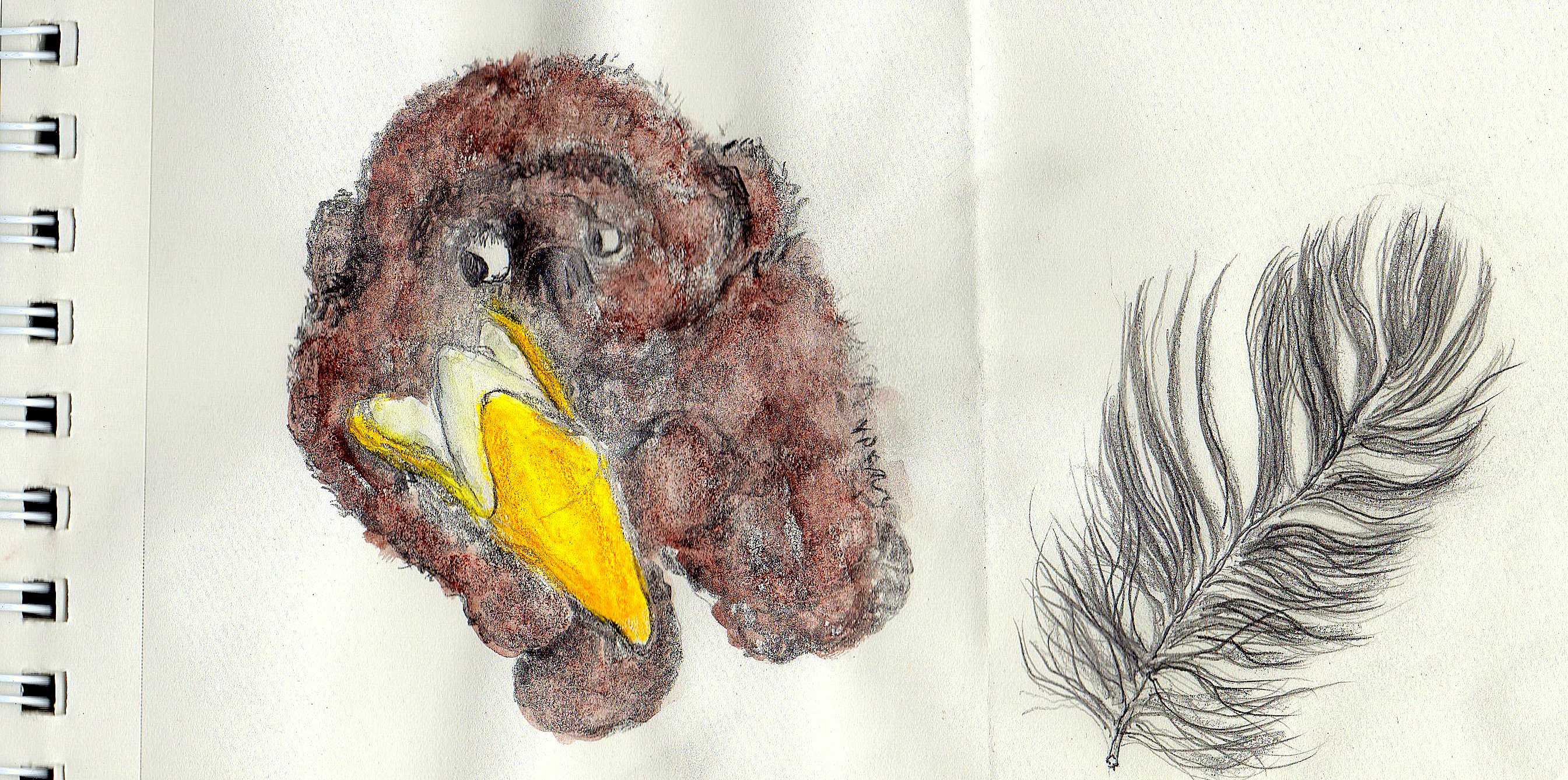
Gorilla Friend and Crow Feather

What’ll I draw? What’ll I draw? Sometime, you just go with what’s in front of you… anything works to get one started.  My youngest son, who’s not a kid anymore, had a menagerie ‘friends’ when he was a child, most of them, like this little Gorilla, stuffed, some– creatures of the imagination (Red Rhino and the Blue Gnu)… It was like a running repertory theater. Destined from the beginning to be an actor/director.
Gorilla & crow feather


Trash to Art to Trash

images

What to do with it all? Climb up from my basement dungeon studio… stacking and organizing and picking out what to paint over, what to trash.

So much stuff.

Think I’m gonna start taking pieces to A-Space and leaving them in the take-it-free-or trash-it corner. A lot of early assemblages–a few have held up, but they were all experiments (big grown-up word for ‘play’); making them was fun and gave me courage to go on to do other things–but I have to do something with the clutter. The nicer pieces get coated with cement dust from the walls.

Really depressing.

This weekend. Take maybe a dozen or so pieces to A-Space. They’re all at least interesting, in a conceptual sort of way. Compositions of street debris: old can lids, stucco flakes, roofing tar, nails, cigarette butts… dirt. Glued, nailed, tied with string to trashed pieces of weathered plywood or composition board. Capitalism in decay.

What ever possessed me?

I’ve got the larger pieces and paintings stacked face to the wall. Keep them a little cleaner. Some nice pieces. Come see them. Make me an offer and they’re yours.

Galleries, Museums, and The Great Art Frameup

images

It’s increasingly clear to me that the way museums display works of art (and most galleries), alters them as surely as if the curators took brush and paint and wrote messages of ownership across them. What we see in a museum is filtered propaganda, honoring the structures of power, wealth, and those who control it, drawing life from the art and using it like a drug to induce a state of awe and subservience, not for the art, but the invisible powers that assembled the display. How grateful we must be, that all this was gathered for us in the marble halls of these mausoleums–a gesture of largess from the wealthy investors for us to view. Where would we be without them! As though the artists (who in their lifetimes, would have been lucky if they could afford entrance), were mere labor, expendable, like the workers who tunneled under the Hudson… 14 of whom died in its construction…and not a one of them named, ‘Holland.’

As though this art would not exist, certainly not for us, but for these glorious prisons.

What is wrong with this picture, is not the fault of the museums and it’s keepers… they are merely playing the roles assigned to them–cleaner and less bloodstained, but comparable, nonetheless, to the police and soldiers, prison guards and executioners of this Empire of Money and Death.

Impossible to imagine in these cathedrals of art, that there might be an other way–where people don’t surrender their creative lives for adulthood, and art flows from the lives of the people, present everywhere and in everything we do and make. Where artists don’t have to compete for the one spot in ten thousand where they can live by their art, and everyone can have works of art beside them, not just the wealthy.


Capitalism controls our very imagination–that we cannot believe anything else can exist. How then, as artists, can we let ourselves serve these robotic masters!

No Revolution without Art! No Art without Revolution!