Reiner Stach: Kafka Biography

Anthony's avatarTime's Flow Stemmed

A Kafka industry exists. Yet, of the two guides I spoke to in Prague this year, the first informed me that Kafka had never been published, the second that Kafka lived most of his life in Paris. Why of all writers does Kafka return to us in so many different ways? Do the contradictions and ambiguities of his extraordinary stories somehow feed a Kafka mythology that turns him into an allegorical figure living on the threshold between life and death? “Life is a state of being, not an activity,” writes Reiner Stach, “You find out only at the end whether you had a life.”

This year provided the third and final volume of Reiner Stach’s biography of Franz Kafka, chronologically the first. The order of publication was dictated by legal wrangling, availability of sources and doesn’t particularly matter. Stach’s achievement is to have written, eventually, the only definitive biography of Kafka…

View original post 423 more words

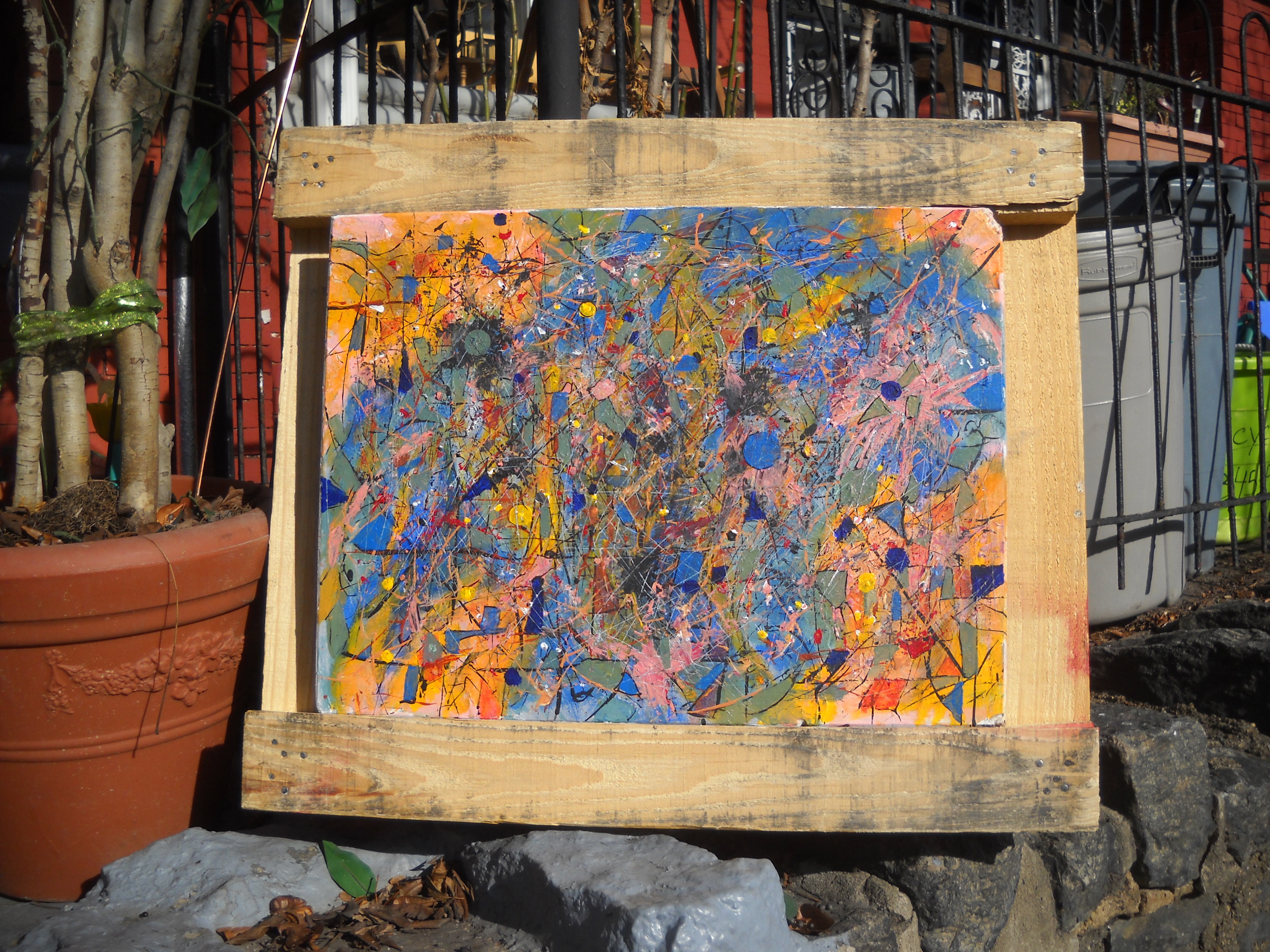
#622 – with page from Goby’s Journal: Stasi Trump Jesus and the Subjunctive Voice

18″ x 24″ Acrylic on wood.
Layering. Interested in giving an impression of depth, without resorting to geometric perspective. Pollock, of course… but also, the illusion that one is looking at something… both real, and mysterious, like Hubble photos, or electron microscopy… in color. right click on photo for more detail.

622
View GALLERY HERE.

… I’m thinking of using this piece of a packing crate for a frame. Paint it black.
packing-crate-622

_____________________________

Goby’s Journal: December 23, 2016

Stasi, Trump, Jesus and the Subjunctive Voice

In an age when anyone who hears us speak, in person, or through social media, students in our classrooms, our patients or customers–when anyone might feel empowered by the Trumpocracy, to report you, to troll you, to try to get you fired, blacklisted, kicked off a plane…
It would be well, were we to revive the long neglected subjunctive voice.
To polish our skills at not quite saying what we mean.

If one were to imagine oneself, say, in 1956 East Berlin, one would find ways, even in front of a class, of speaking to those who “had ears to hear,” without giving cause to those who would take you down, were they so inclined. Which brings to mind–that phrase, “those who have ears to hear” — the language used by Jesus in the Gospels: speaking in parables. Jesus, too, lived under a hostile power. How much of that language was made to pass safely through the Roman occupation?

We aren’t at that level, yet… of Stasi, say… where no one, not even our most radical friends, can be trusted, because anyone can be made to be an informant. Let them only describe what will happen to your children, your aging parents, should you refuse. But this is where we are headed.

I have heard stories. Some reported in news, some seen on social media. Would that it were true that nothing of the kind had happened to anyone I know.

Be careful. Don’t say anything in private you wouldn’t say in public, cause… nothing is private. Learn from poets how to say more and less and other than what you mean.

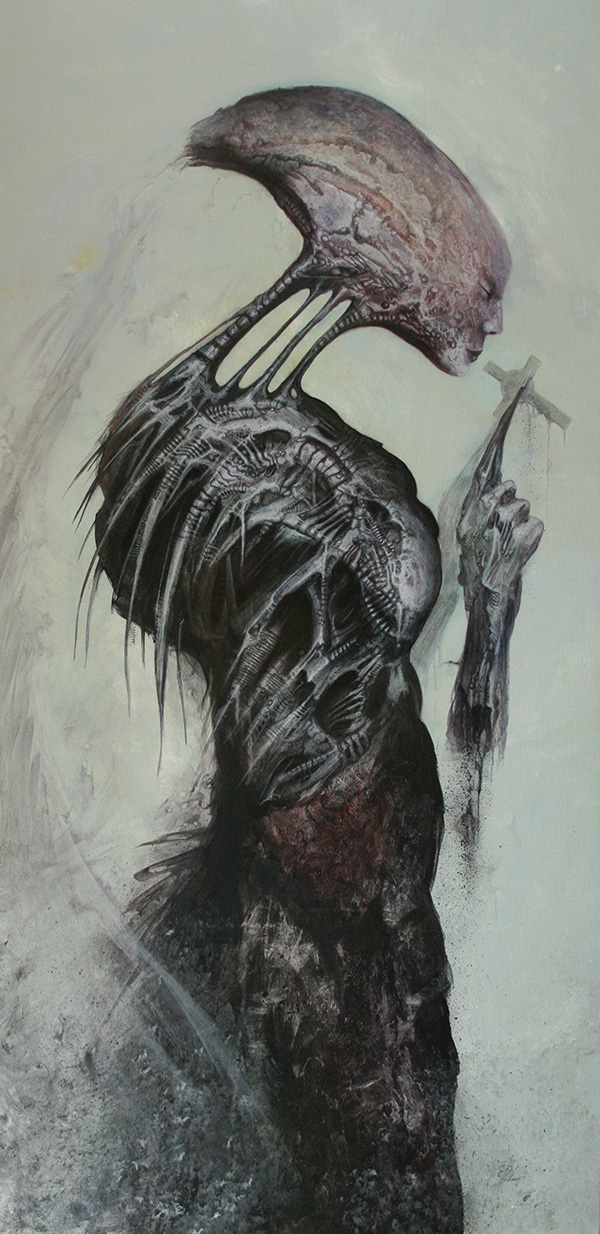
Putin Trump Heidegger The End of the World

macabre-artists-687

Why would Putin love Trump… other than oil, I mean?
What Heidegger was to Hitler, Dugan is for Putin

The Most Dangerous Philosopher in the World ?

<Dugin thinks Trump’s victory is a monumental strike against the “globalists”, whose candidate was Hillary Clinton – the same language that you can easily find peppering conservative American websites like Breitbart News, Drudge Report and conspiracy king Alex Jones (a particular favorite of Dugin’s). He thinks Trump’s victory was a kind of “revolution” started by American people and should lead to worldwide defeats of the globalist agenda, draining the proverbial “swamp” the world over.

Dugin doesn’t stop there, however. His visions of what Trump’s victory means go into the apocalyptic and civilization-changing:

“We need to return to the Being, to the Logos, to the foundamental- ontology (of Heidegger), to the Sacred, to the New Middle Ages – and thus to the Empire, religion, and the institutions of traditional society (hierarchy, cult, domination of spirit over matter and so on). All content of Modernity – is Satanism and degeneration. Nothing is worth, everything is to be cleansed off. The Modernity is absolutely wrong — science, values, philosophy, art, society, modes, patterns, “truths”, understanding of Being, time and space. All is dead with Modernity. So it should end. We are going to end it.”
>http://bigthink.com/…/the-dangerous-philosopher-behind-puti…
Dugin thinks Trump’s victory is a monumental strike against the “globalists”, whose candidate was Hillary Clinton – the same language that you can easily find peppering conservative American websites like Breitbart News, Drudge Report and conspiracy king Alex Jones (a particular favorite of Dugin’s). He thinks Trump’s victory was a kind of “revolution” started by American people and should lead to worldwide defeats of the globalist agenda, draining the proverbial “swamp” the world over.

Dugin doesn’t stop there, however. His visions of what Trump’s victory means go into the apocalyptic and civilization-changing:

“We need to return to the Being, to the Logos, to the foundamental- ontology (of Heidegger), to the Sacred, to the New Middle Ages – and thus to the Empire, religion, and the institutions of traditional society (hierarchy, cult, domination of spirit over matter and so on). All content of Modernity – is Satanism and degeneration. Nothing is worth, everything is to be cleansed off. The Modernity is absolutely wrong — science, values, philosophy, art, society, modes, patterns, “truths”, understanding of Being, time and space. All is dead with Modernity. So it should end. We are going to end it.”


American Dystopia: The Empire of War

S.C. Hickman's avatarThe Dark Forest: Literature, Philosophy, and Digital Arts

Capitalism and neoliberalism carry wars within them like clouds carry storms.

—Éric Alliez and Maurizio Lazzarato, To Our Enemies

Henry Miller the ex-patriot who would return to his native land just before the rise of Hitler had a glimpse into the heart of the American Dystopian world when he glimpsed from his ship the coastal regions of Boston:

The American coast looked bleak and uninviting to me. I didn’t like the look of the American house; there is something cold, austere, something barren and chill, about the architecture of the American home. It was home, with all the ugly, evil, sinister connotations which the word contains for a restless soul. There was a frigid, moral aspect to it which chilled me to the bone.1

What Miller discovered in his trip across the vast continent of his native land was a dystopian nightmare. He’d fought out of it ten years before…

View original post 1,482 more words

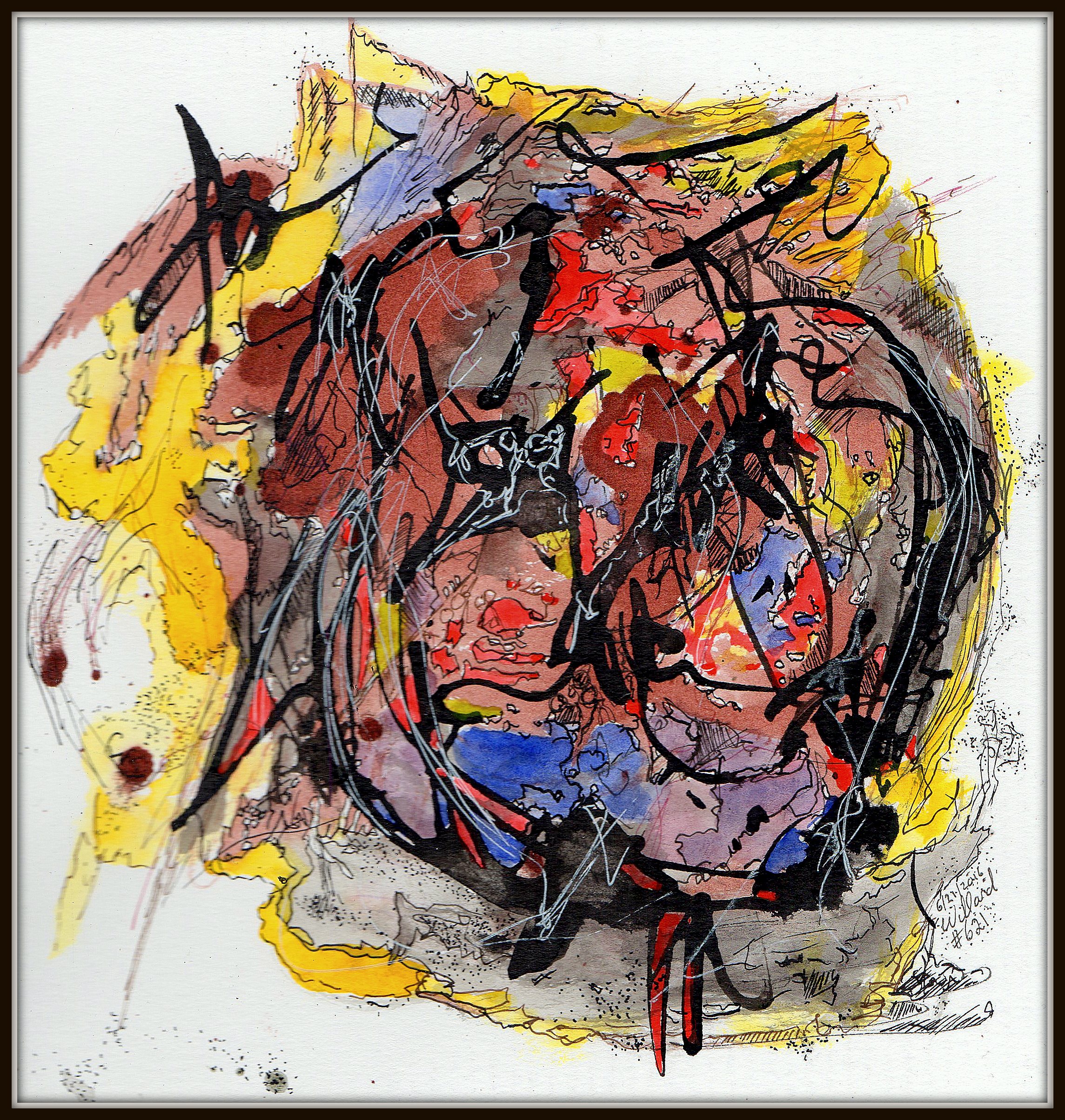
#619

20″ x 16″ Acrylic on canvas
There’s no message here. Just colors. Useless… because, to pursue what is of no use, in a world where nothing is valued, and everything is used…a world where Death, with all leaders and all parties as its agents,  uses us all, this, in itself, is an act of defiance and rebellion.
619

View GALLERY HERE./>