32″ x 32″ Acrylic on canvas. I see cosmic space-scapes in micro images, and cellular patterns in cosmic images.


View GALLERY HERE.
This is a color inversion of #506 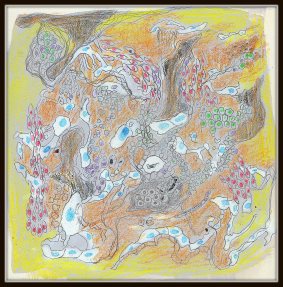
32″ x 32″ Acrylic on canvas. I see cosmic space-scapes in micro images, and cellular patterns in cosmic images.
View GALLERY HERE.
This is a color inversion of #506
.01 Staedtler pen … also did some courtroom drawing this morning, cop dragged a women from her home, wrongful arrest– Acquittal! Michael Coard is a warrior for justice.

5″x 5″ Silverpoint, colored pencil.
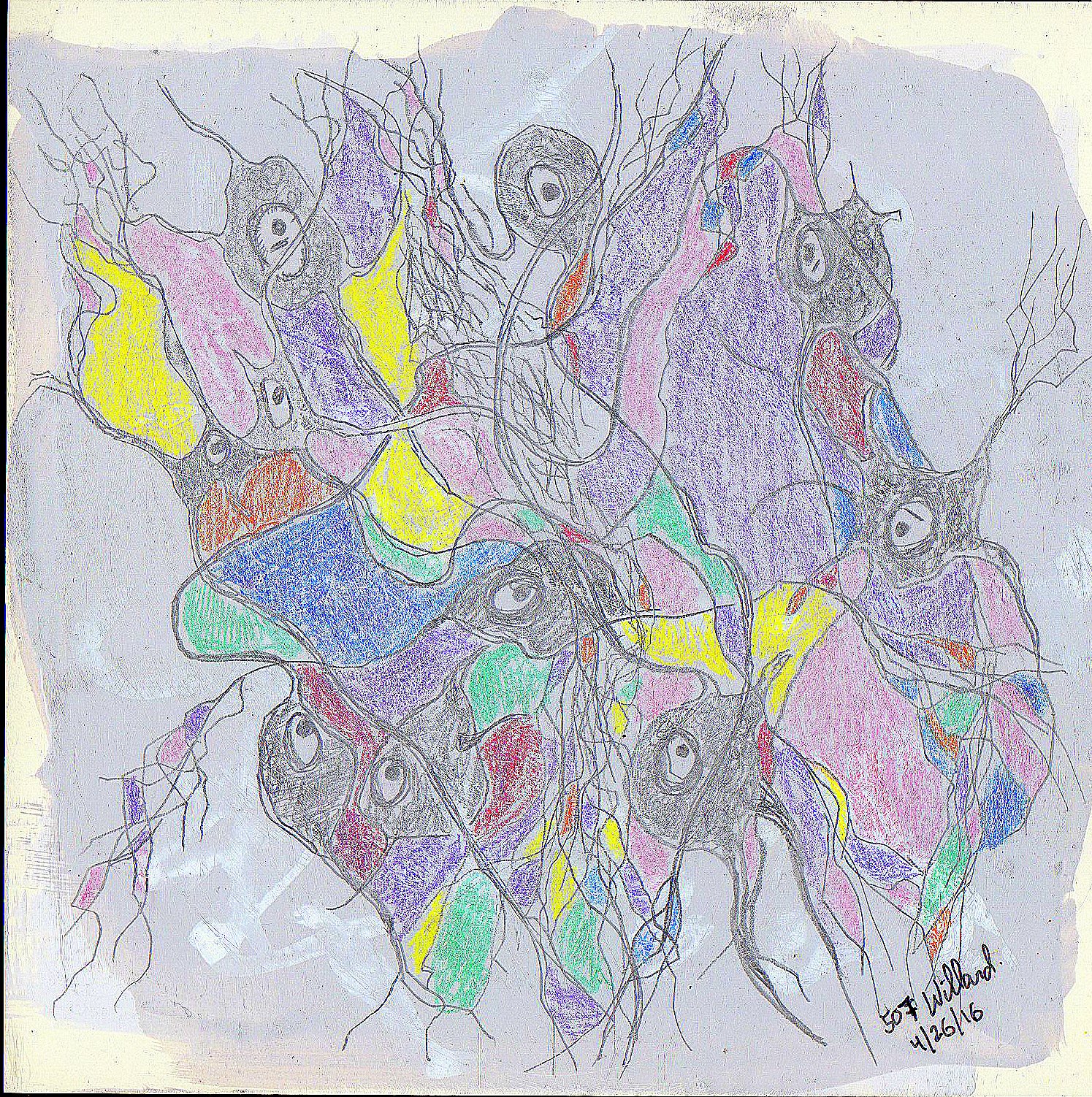
5″ x 5″ Silverpoint, color pencil (sold)

View GALLERY HERE.
5″ x 5″ Silverpoint, gouache highlights, on clayboard. I see where this is going… picked up a free copy of Gray’s Anatomy. (Click to Zoom!) Thinking–histology, microscopic structures of cell and tissues. I mean, really–look at these!
First art I was paid for–microscopic studies my professor in an embryology class had me do for him. Crow quill pen… all stippling. Took me forever, for $5.00 each.
It just occurred to me that THIS is what I was responding to in the patters I saw in broken pavement (HERE for instance).

View GALLERY HERE.

It’s increasingly clear to me that the way museums display works of art (and most galleries), alters them as surely as if the curators took brush and paint and wrote messages of ownership across them. What we see in a museum is filtered propaganda, honoring the structures of power, wealth, and those who control it, drawing life from the art and using it like a drug to induce a state of awe and subservience, not for the art, but the invisible powers that assembled the display. How grateful we must be, that all this was gathered for us in the marble halls of these mausoleums–a gesture of largess from the wealthy investors for us to view. Where would we be without them! As though the artists (who in their lifetimes, would have been lucky if they could afford entrance), were mere labor, expendable, like the workers who tunneled under the Hudson… 14 of whom died in its construction…and not a one of them named, ‘Holland.’
As though this art would not exist, certainly not for us, but for these glorious prisons.
What is wrong with this picture, is not the fault of the museums and it’s keepers… they are merely playing the roles assigned to them–cleaner and less bloodstained, but comparable, nonetheless, to the police and soldiers, prison guards and executioners of this Empire of Money and Death.
Impossible to imagine in these cathedrals of art, that there might be an other way–where people don’t surrender their creative lives for adulthood, and art flows from the lives of the people, present everywhere and in everything we do and make. Where artists don’t have to compete for the one spot in ten thousand where they can live by their art, and everyone can have works of art beside them, not just the wealthy.
Capitalism controls our very imagination–that we cannot believe anything else can exist. How then, as artists, can we let ourselves serve these robotic masters!
No Revolution without Art! No Art without Revolution!
If you listen, not to what artists do, but those who devote themselves to talking about what artists do (and not all who engage in this are Gatekeepers—though criticism lends itself– all too seductively– to Gatgekeeping), it sounds like a search for—an almost religious quest—for just that: a master signifier.
Who or what then is the master?
But what artists (and I use this in its most inclusive sense, in terms of the media employed: visual, performance, literary, musical… and fusions of all these.. )–what artists do, again and again over time, is defy and abrogate and replace the reigning master. Those who don’t, in time, are left behind, left out. Artists who no longer live and create in their own time, in the communal time they inhabit, are they still artists?
And where is the master?
Is this contradiction, this incommensurate desire, the search for that which does not and cannot exist, and its value… its authority, authenticity, embedded in the negative—in the power to hold together the impossible wish with its acknowledged failure?
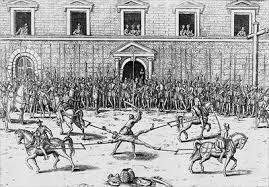
Such that, the artist ask, not for belief, but the capacity to entertain the contradiction—to maintain the tension between belief and … not credulity… not reality.. but whatever that reality might be which stands outside the illusion…nothing less, than the capacity to hold the tension… drawn and quartered, the draft horses chained right foot and arm, to left foot and arm, and the Master Signifiers lashing the whip!
Will the work… as you enter its aura… hold?
Hold the tension?
… that they cannot rip you apart… sunder your body.
That’s all I ever hope for from any work of art.
Such a small thing in a difficult world… to be an artist.
This is what I do to train my eye. Drawing is how one learns to see.
I’ve started taking my folding chair out and spending a couple hours each day drawing… doing buildings, street scenes–something of a change for me. I ordered Pete Scully’s Creative Sketching Workshop–looking forward to working at urban sketching every day till the weather turns cold again.

View GALLERY HERE.
Read article here –> Artsy Editorial
“When artists operate outside the gallery space, whether because their work functions best there, or because they are forced to, they are both creating valuable art and making the limitations of traditional art institutions visible—physically, historically, and conceptually. Perhaps such work can even change those institutions, those structures of looking. Perhaps it can change society at large. And that’s unceasingly relevant.”
 Jacob Russell's Magic Names