53rd & Pine

53rd & Pine
50th & Baltimore
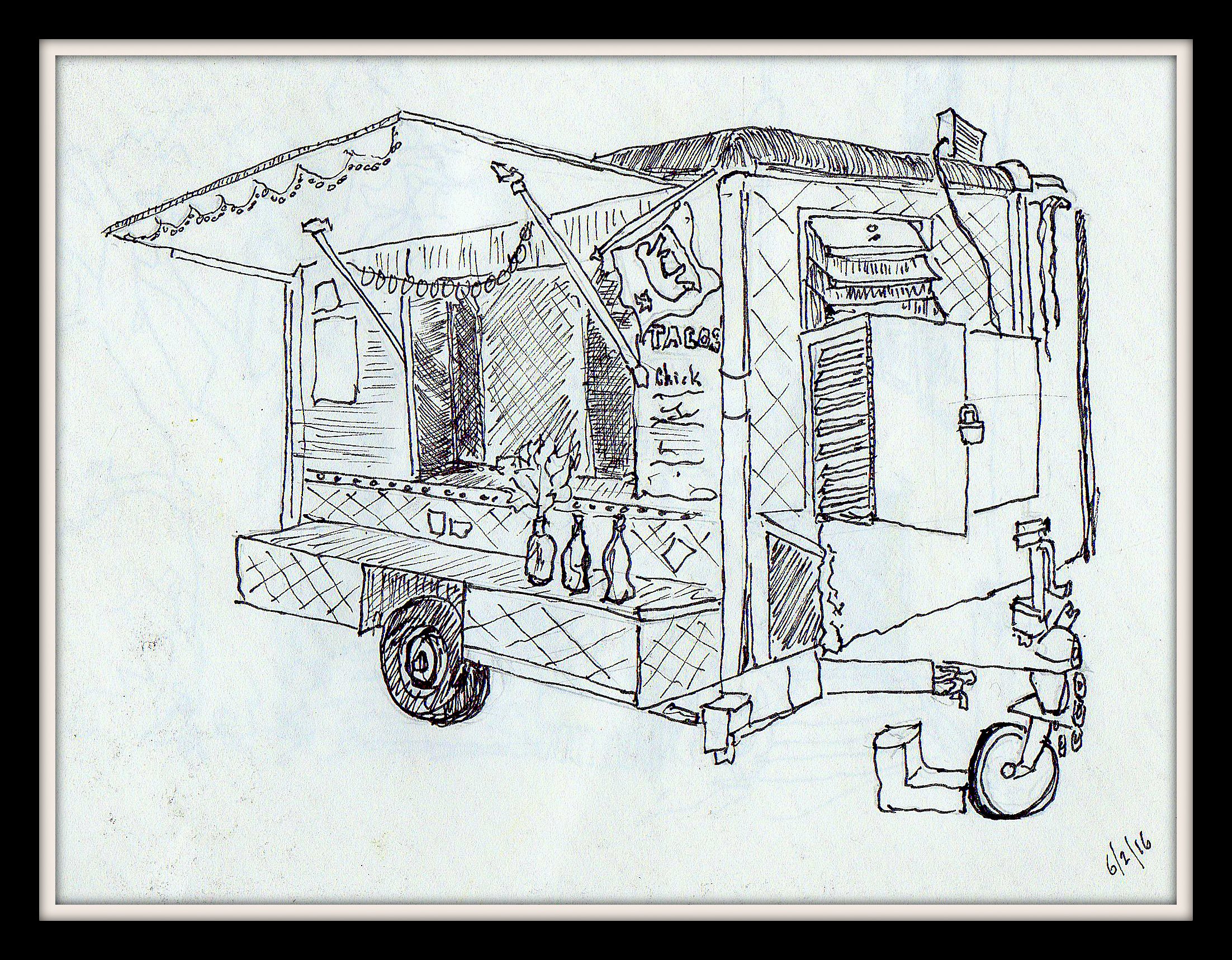
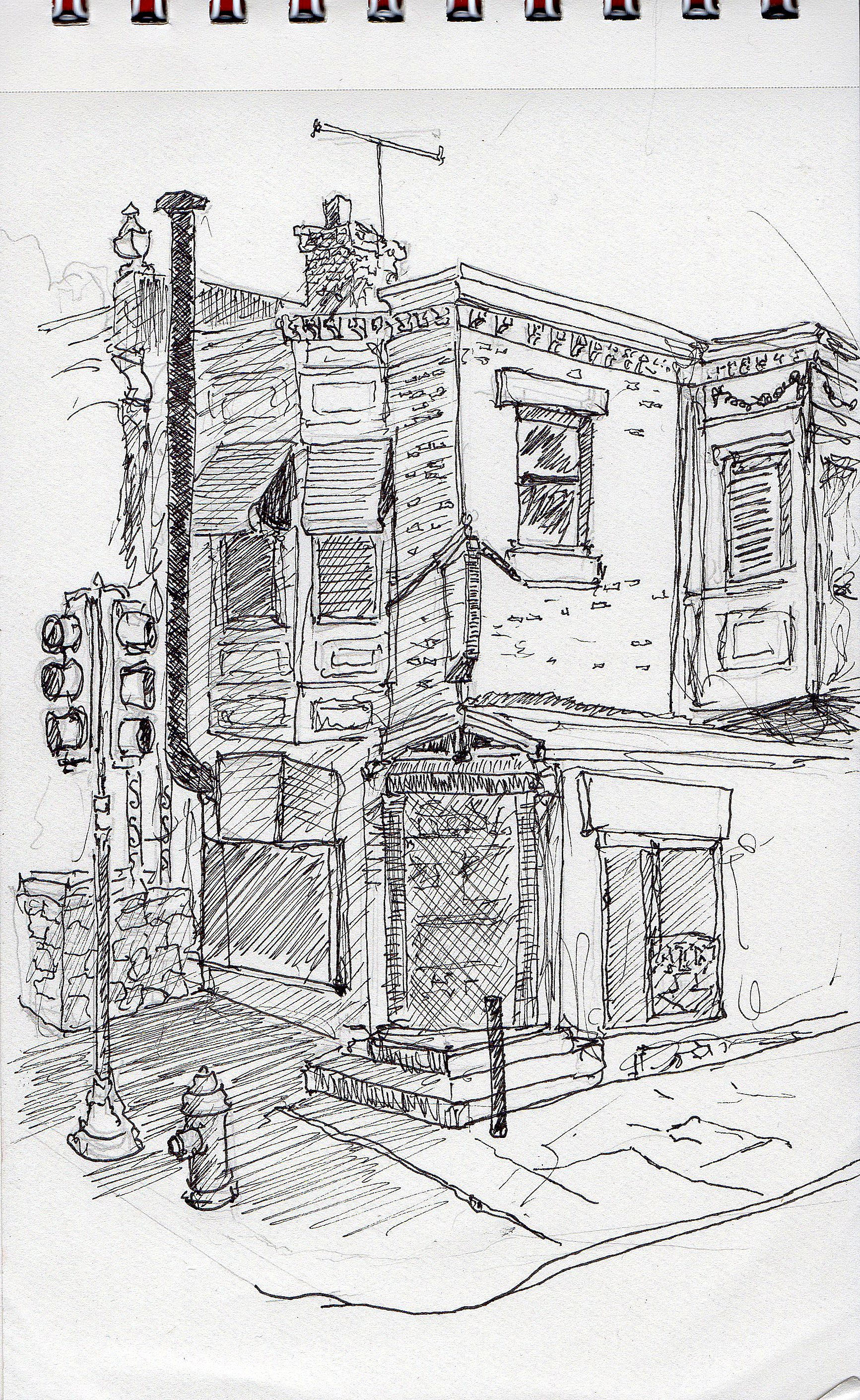
54th & Pine, Philly. Not very good at this yet… gonna take a while, but spending an hour or two drawing has the same effect for me as meditation. And it raises the level of my attention– to everything I see. Nothing like it. Eyeballing this, unless you have architectural perspective training, is not easy. I do use perspective guidelines, but complex structures are a challenge… like the fucking oriel bays so common in West Philly. Every bay has two additional vanishing points, besides the right angle facades of the building, and while the upper vanishing point can be ignored with two or three story buildings, unless you’re drawing them from close up, the bays bring that into play too… cause if eye level is sitting or standing above the street–you’re seeing the bottom of those bays. Makes pretty simple buildings, quite complex, figuring out the perspective.
I’m not after geometrical perspective, but even to play with it, play with distortions, you have to have a pretty good grasp of perspective. I’m 40 plus years out of art school, so having to start all over. Going through Joseph D’Amelio’s Perspective Drawing Handbook, and finding it helpful.
Add to that, that while I’m more than competent with close in details of texture and form, with pencil or pen and ink. Draw a feather… or a pine cone: no problem. But this is a different order of drawing for me.
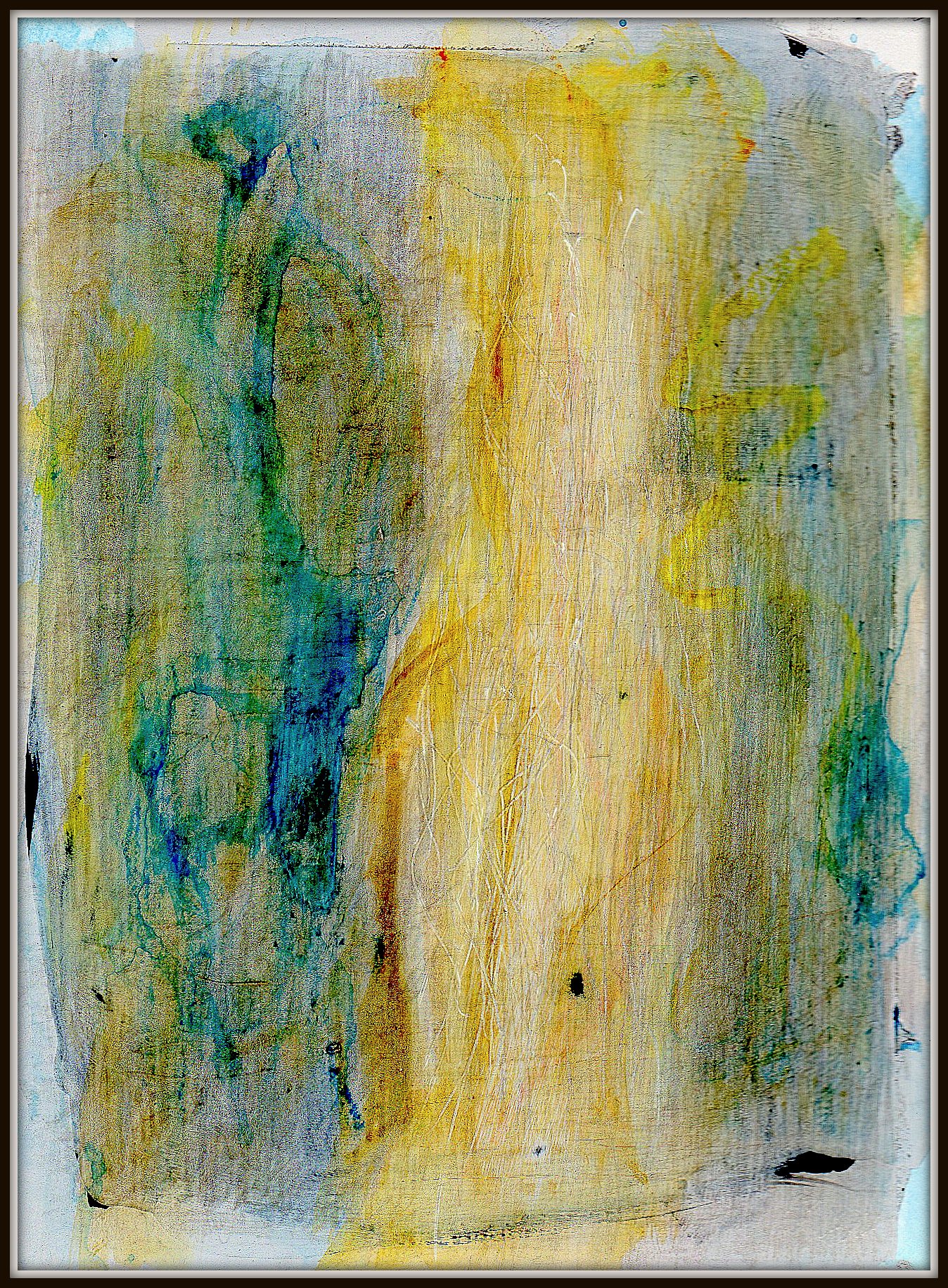
26″ x 30″ Acrylic on Masonite. Not altogether happy with this, but sometimes don’t want harmonious colors. Sometimes I want colors that make your eyes hurt. This been sitting on my easel for weeks. Sometimes, I can paint over and start again, or set a piece aside. This was like a clogged drain. Better to finish it and renew the flow.

View GALLERY
6″ x 4.5″ Silver, Gold, toned ground over layer of black gesso, with neocolor wash.

View GALLERY HERE.
6″ x 4.5″ Silver, Gold, Aluminum with Neocolor wash, white gel pen on layered ground, toned gray over black gesso, some scratch through. I build on the patterns created by the underlying layers.

View GALLERY HERE.

This is a comment to the post below–rebloged from Alien Ecologies.
The ‘realism’ of the artist was never that of the scientist, even when their work drew on geometrical perspective, was colored by optics, and anatomically rendered. The pictorial plane never truly “represented.” What was suggested there has always been both more and other than the named subject, even when following conventional rules and stripped of other worldly intentions (see Hubert Damisch: A Theory of /Cloud/ for a case study of development of internal resistance to pictorial realism from Correggio to Cezanne).
The moment an artist accepts what they know to be true–and let’s that realization influence what they do (even more so when meticulously following realist conventions, because the contradiction between the claim to representation, and the dependence on these conventions is all the more disturbing), there will be a desire to deal with the fact of that contradiction–in the work itself. This is not a flight from reality–material or otherwise, but commitment to it. There is no art without the “meta.’ Naive realism simply chooses to let illusion stand for the real, without calling attention to it. I would go so far as to suggest that this contradiction, the failure of representation, is the generative engine that drives change. I think that can be said for abstract, ‘non-representational’ art as well, with the fault lying, not between the claim to a ‘subject’ that exists in the material world and the pure fabrication that is the art, in the failure to entirely reduce the aesthetic object to the picture plane, or surface form and matter of 3 dimensional works. There is just no way to exclude the viewer, who is no mere observer, but actively participates–enters the work and moves through it–creating something like a virtual reality that changes with every viewer, across cultures and spans of time.

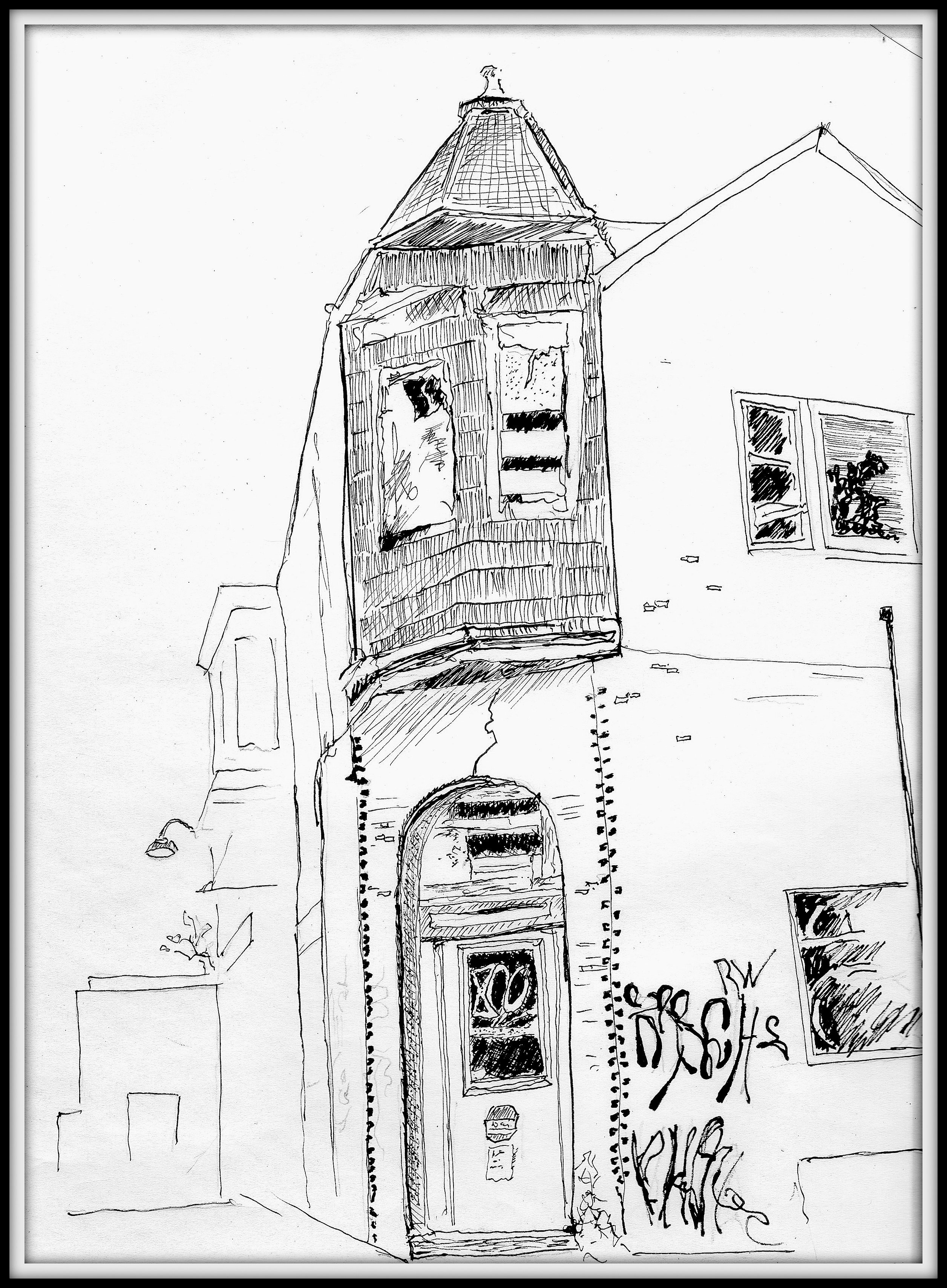
 Jacob Russell's Magic Names