Reiner Stach: Kafka Biography

Anthony's avatarTime's Flow Stemmed

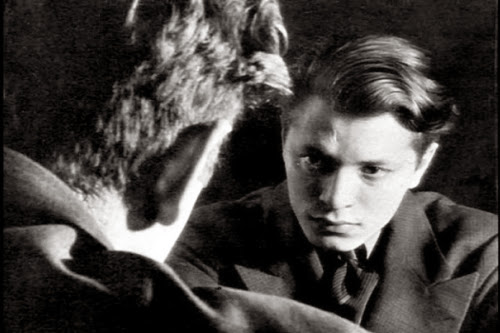
A Kafka industry exists. Yet, of the two guides I spoke to in Prague this year, the first informed me that Kafka had never been published, the second that Kafka lived most of his life in Paris. Why of all writers does Kafka return to us in so many different ways? Do the contradictions and ambiguities of his extraordinary stories somehow feed a Kafka mythology that turns him into an allegorical figure living on the threshold between life and death? “Life is a state of being, not an activity,” writes Reiner Stach, “You find out only at the end whether you had a life.”

This year provided the third and final volume of Reiner Stach’s biography of Franz Kafka, chronologically the first. The order of publication was dictated by legal wrangling, availability of sources and doesn’t particularly matter. Stach’s achievement is to have written, eventually, the only definitive biography of Kafka…

View original post 423 more words

American Dystopia: The Empire of War

S.C. Hickman's avatarThe Dark Forest: Literature, Philosophy, and Digital Arts

Capitalism and neoliberalism carry wars within them like clouds carry storms.

—Éric Alliez and Maurizio Lazzarato, To Our Enemies

Henry Miller the ex-patriot who would return to his native land just before the rise of Hitler had a glimpse into the heart of the American Dystopian world when he glimpsed from his ship the coastal regions of Boston:

The American coast looked bleak and uninviting to me. I didn’t like the look of the American house; there is something cold, austere, something barren and chill, about the architecture of the American home. It was home, with all the ugly, evil, sinister connotations which the word contains for a restless soul. There was a frigid, moral aspect to it which chilled me to the bone.1

What Miller discovered in his trip across the vast continent of his native land was a dystopian nightmare. He’d fought out of it ten years before…

View original post 1,482 more words

Scrimmage of Appetite, or: Born 103 Years Ago Tomorrow — BLCKDGRD

THE HEAVY BEAR THAT GOES WITH MEDelmore Schwartz“the withness of the body”The heavy bear who goes with me, A manifold honey to smear his face, Clumsy and lumbering here and there, The central ton of every place, The hungry beating brutish one In love with candy, anger, and sleep, Crazy factotum, dishevelling all, Climbs the building, kicks the football, Boxes his brother in…

via Scrimmage of Appetite, or: Born 103 Years Ago Tomorrow — BLCKDGRD

The Future is Black Hole

What we see now, is essentially what has been in place since before most of those marching on the street were born. If it were not so, there would not be this rolling-over-on-it’s- belly full-out effort to normalize the nightmare. They were already fascists. We already lived in an Empire of Money and Death that deserved to be overthrown.
Some of us told you. Not that it affords any comfort or satisfaction. If we can’t turn this around; if we can’t prevent what is sure to happen, there really isn’t any reason to live. Death is by far the greater mercy.

Deleuze & Guattari: Culture of Death / Culture of Capital

Capital as the Body of Death

S.C. Hickman's avatarThe Dark Forest: Literature, Philosophy, and Digital Arts

Desiring machines make us an organism; but at the very heart of this production, the body suffers from being organized in this way, from not having some other sort of organization, or no organization at all.

– Gilles Deleuze/Fritz Guattari, Anti-Oedipus

There comes a moment in their great work Anti-Oedipus (for that is what we must call this black book of riddles) when D&G – in an almost gnostic litany of negativity from one of the drifting echoes of Artaud’s process of ‘Unmaking / Unnaming’ (“No mouth. No tongue. No teeth. No larynx. No esophagus. No belly. No anus”) expose the body of death to the onslaught of expressive delineation: “The automata stop dead and set free the unorganized mass they once served to articulate.(8) It’s as if the nanobots of our own late era had already infiltrated the discourse of this early dreamwork, as if the viral memes of our late capitalism…

View original post 1,313 more words

Ontology as a schema of observation

Carlton Clark's avatarSocial Systems Theory

To say that a person or a class or people is oppressed by society is too simplistic. If we think of society as the totality of human beings, plus maybe institutions like schools, churches, and businesses created by human beings, we are using individual/society distinction, rather than thinking of society as global communication. In the traditional view, the individual is understood as the irreducible unit of society. Society is the whole and individual people are the parts. The individual then is understood as alienated from society, oppressed by society, indoctrinated by society, struggling for liberation from society, an integral member of society, or placed in some other relation to society.

But these are all observations. So the question becomes, What observer observes the individual as X? What observer observes the individual as alienated, oppressed, seeking liberation, or in some other relation to society?

We might say that a critical theory, religion, or…

View original post 336 more words

Two-Sided Forms

Carlton Clark's avatarSocial Systems Theory

Religion observes through the form of transcendence/immanence. The “ground of all being” is transcendent; this is what we do not see or experience in daily life, but, according to the religion system, we can get a glimpse through the curtain in brief experiences of grace. The transcendent is the unmarked side of the form because it cannot be explained or described. It’s an empty space. Everyday experience is the marked side, and religion devotes itself to describing the sins, transgressions, corruptions on this side. It develops elaborate classifications of sins, such as mortal/venial, the seven deadly sins, etc. In other words, religion first distinguishes this world of sin and corruption, marking it off from the perfect transcendent reality. Then it re-enters the form on the marked side to make further distinctions among sins. So sins in general are distinguished as mortal (unforgivable) and venial (forgivable) sins. Venial sins are marked, and…

View original post 359 more words