3″x2″ Watercolor, ink

3″x2″ Watercolor, ink
3″x3″ Watercolor, ink.
The dimensions of a work of art are not measured by inches or centimeters, but by the space it occupies in the human imagination.
3″x3″ Watercolor, ink
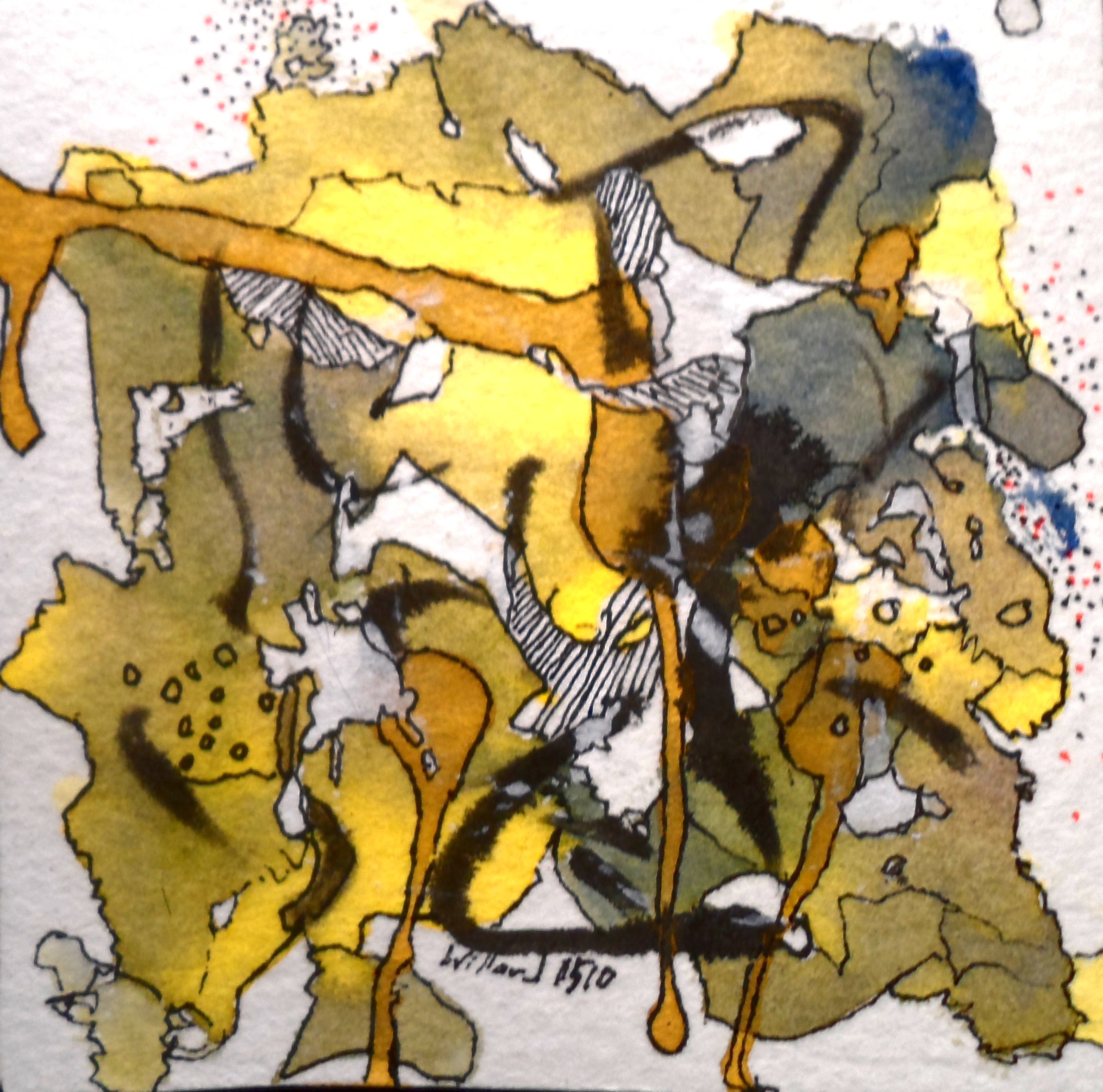
3″x3″ Watercolor, ink.

2″x3″ Watercolor, ink, glitter

3″x3″ watercolor, India and Acrylic Ink.
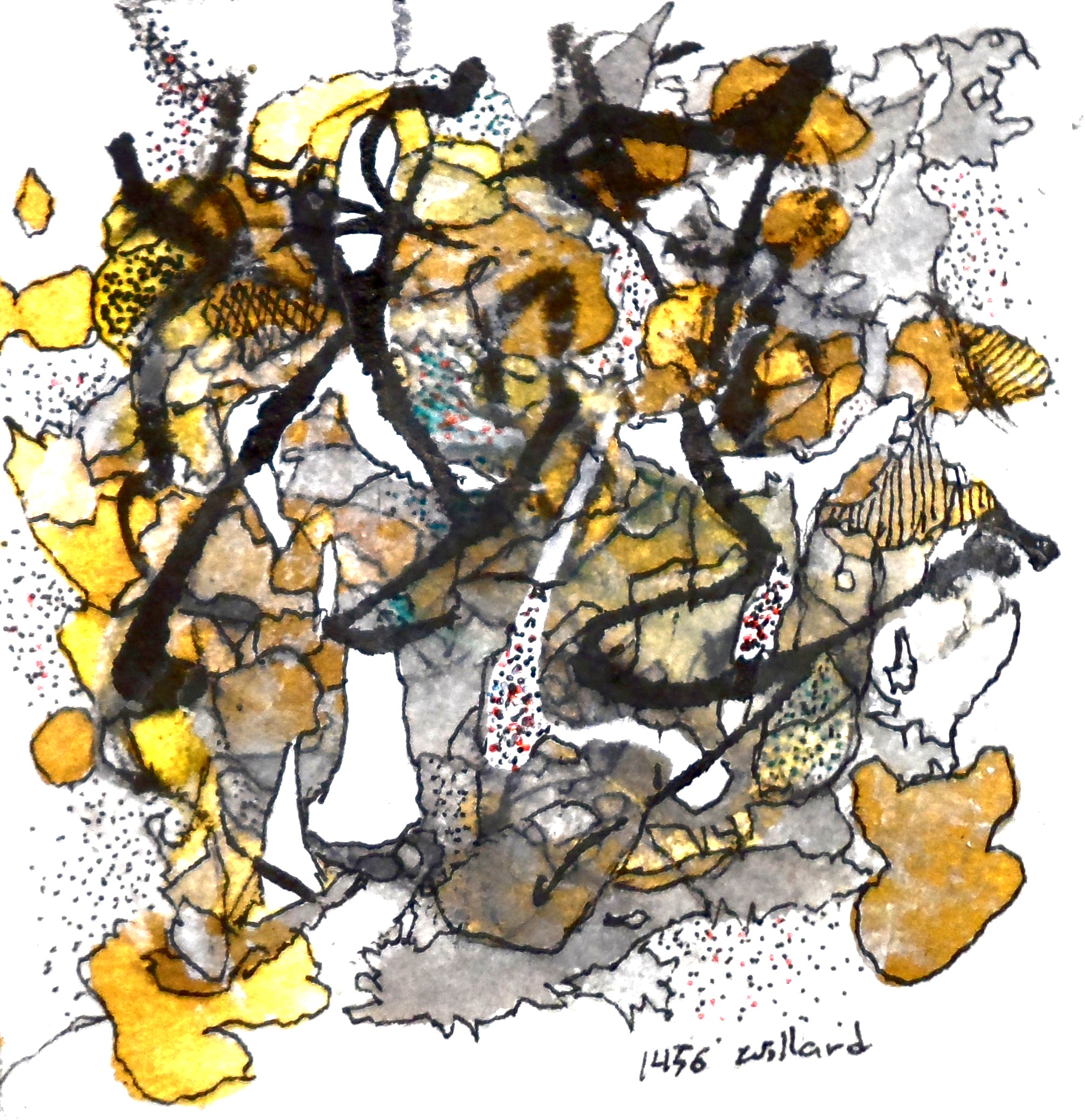
is not measured in centimeters or inches, but by the space it occupies in the human imagination.
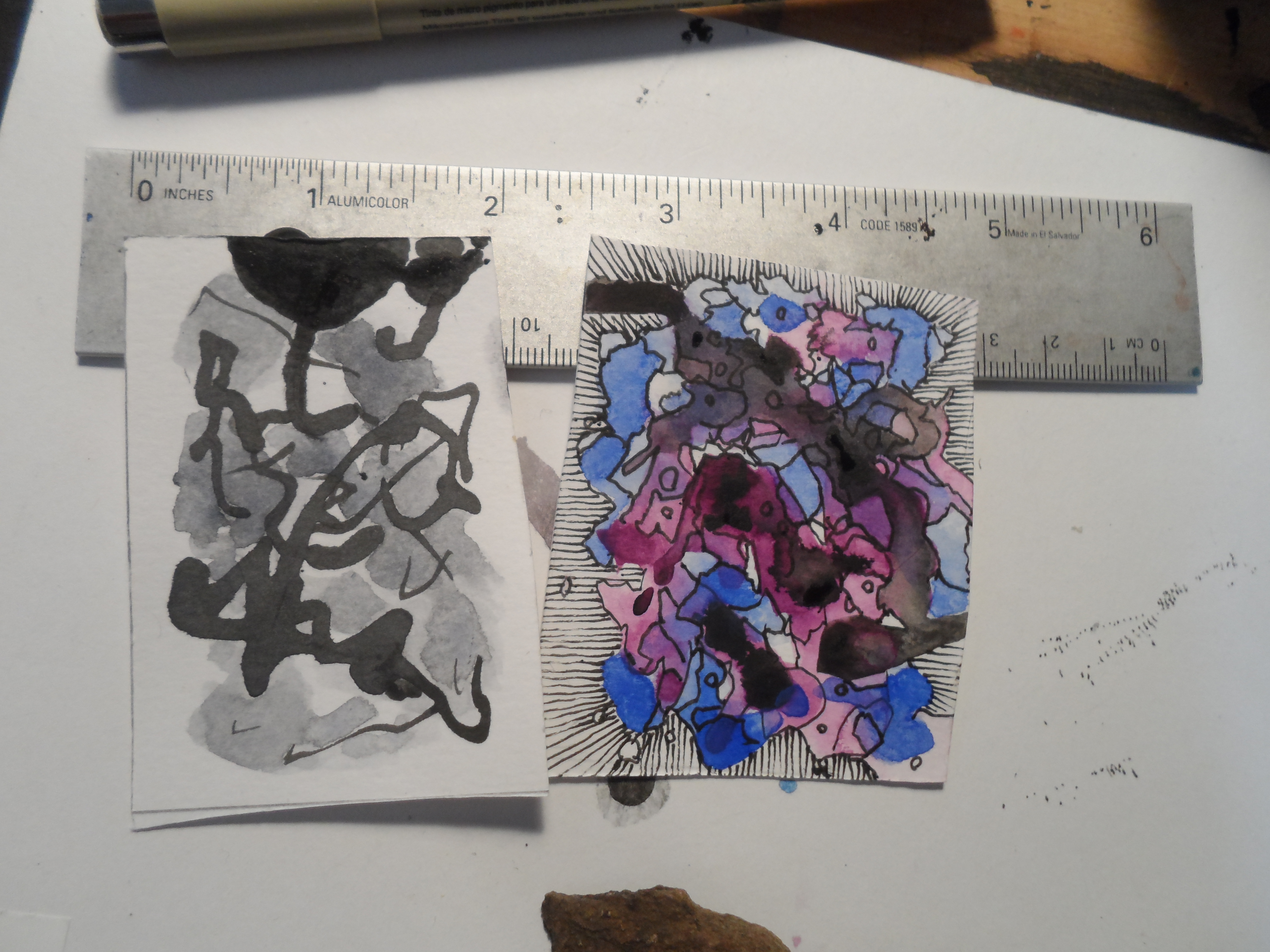
This is as important as anything you are likely to read on our slide into Fascism.
Pia Crawford-Silva
oorpednSts376113f08gu16m4i1l2u4lh36fhiiua5fui331clf4h5au623c ·
5/3/25 The New York Times subscriber newsletter, “The Interpreter.” I found it a super valuable read.
The frightening precedents for Trump’s ‘legal abyss’
“Oopsie … Too late,” President Nayib Bukele of El Salvador wrote on X with a cry-laughing emoji on March 16. Below it was a screenshot of a headline: “Fed judge orders deportation flights carrying alleged gangbangers to return to US, blocks Trump from invoking Alien Enemies Act.”
Despite the court order, federal officials had neither prevented the takeoff of the deportation flight that was still on the ground at the time of the court’s order, nor turned around the two other planes that were already in the air. After news broke that the men were now in El Salvador, imprisoned in the notorious complex known by its Spanish acronym CECOT, Bukele’s mocking tweet made clear that he considered the deportees beyond the reach of U.S. courts.
The Trump administration has taken a similar position, albeit with fewer emojis. “Federal courts generally have no jurisdiction over the president’s conduct of foreign affairs, his authorities under the Alien Enemies Act, and his core Article II powers to remove foreign alien terrorists from U.S. soil and repel a declared invasion,” Karoline Leavitt, the White House press secretary, said in a statement on March 17.
Since then, the administration has grown even more defiant. This week, when asked about the case of Kilmar Abrego Garcia, a Salvadoran immigrant and Maryland father of three who was deported from Maryland to CECOT as a result of “administrative error,” Trump told a reporter that he has the power to free Abrego Garcia but won’t do so — despite a Supreme Court order to “facilitate” his release.
Those claims, along with the Trump administration’s broadly resistant attitude to court orders, its arrests of foreign students for their political activism and its wide-ranging campaign of retribution and intimidation against law firms and universities, have raised alarms that the country is hurtling into a new era of lawlessness.
But there’s a more precise way to understand the Trump administration’s approach to the law, and its potential dangers: the concept of the “dual state.”
First developed by a German lawyer named Ernst Fraenkel in the 1930s, the dual-state theory posits that authoritarianism can take hold in small pockets, even while the broader legal system appears to function more or less normally. In his 1941 book “The Dual State,” Fraenkel, who was Jewish, argued that within Nazi Germany there were in effect two interlinked systems: one in which most laws and many rights still applied; and alongside it a zone of authoritarianism, in which government power was unbounded.
“You can have a world in which there’s the ordinary law that most people benefit from,” said Aziz Huq, a law professor at the University of Chicago who recently wrote about the dual-state theory for The Atlantic. “But running alongside that is this kind of legal abyss in which people fall, and never get out of.”
Ad
Ad
Fraenkel called the first system the “normative state” and the latter the “prerogative state.” But it is perhaps clearer to think of them as the “zone of legality” and the “legal abyss.”
Fraenkel’s crucial observation was that in a dual state, authoritarianism arrives much sooner for some people than others. Those unlucky enough to fall into the legal abyss would find themselves subjected to uncontrolled state violence, while life continued largely as normal for others.
Today, scholars say, the Trump administration appears to be claiming the right to create its own legal abyss. Courts have not yet acceded, and it remains unclear whether the administration will succeed in acquiring such powers. But some of the most vulnerable targets have already been swallowed up. And if left unchecked, the legal abyss can grow ever wider.
A parallel system
In 1930s Germany, the Nazis had been granted near-unlimited power by the Reichstag Fire Decree of 1933, which suspended civil liberties and allowed Hitler to overrule state and local government decrees. The government wasted little time in setting up a system in which the state could do anything from seizing a person’s assets to trying them before a special court and then sending them to a concentration camp to be tortured or killed.
And yet the Nazis still maintained the ordinary legal system to handle cases that were not seen as political — many contract cases, employment disputes, and criminal prosecutions, for example — and did not involve individuals seen as enemies of the regime, such as Jews or dissidents.
Fraenkel, one of the few Jewish lawyers allowed to practice law under Nazi rule until he fled the country in 1938, concluded that his paramount task as an attorney was to act as a kind of railway “switchman,” doing whatever he could to prevent his clients from getting shunted off the tracks of the normative system and into the legal abyss.
But dual states were hardly unique to Nazism. Scholars have used Fraenkel’s theory to explain the dynamics of fully and partly authoritarian governments around the world. In the early years of apartheid rule in South Africa, for example, rule-guided courts existed alongside a violent parallel system in which Black activists could be detained for years without trial. In Chile during the dictatorship of Gen. Augusto Pinochet, the junta detained, tortured and disappeared its perceived enemies, even as the country’s courts still enjoyed formal independence.
In Singapore, the rule of law applies within the economic and commercial sphere, while political dissent is suppressed. And in China, the legal system has supported the country’s economic boom by generally enforcing rules around contracts and investment, even as the country’s leaders have expanded a legal abyss that has swallowed up political dissidents, ethnic minorities like Uighurs, and others.
Dual states can also arise in countries that are eroding from democracy into authoritarianism. In those cases, leaders often selectively preserve some aspects of the preexisting legal system, but take steps to ensure that it cannot interfere with their oppression of political enemies, Zhiyu Li, a law professor at Durham University in England, writes in a forthcoming law review article. Frequently, this is done by packing high courts with loyalist judges and creating special tribunals with little or no due process for certain cases or people.
One of the most prominent recent examples of that phenomenon occurred in the place to which the Trump administration is deporting migrants: El Salvador.
In 2020, Bukele’s party removed all of the members of the Constitutional Chamber of the country’s Supreme Court, replacing them with handpicked loyalists. Then in 2022, following an outburst of gang violence of the kind he’d campaigned to curtail, he declared a state of emergency, suspended civil liberties, and ordered mass arrests of those believed to be gang members.
Ordinary courts still exist and have jurisdiction over disputes and criminal cases that fall outside Bukele’s criminal crackdown. That has helped to bolster the president’s message, at home and abroad, that his exceptional powers are a means of allowing ordinary life — and the economy — to flourish within a safer El Salvador.
But his anti-gang efforts created a complete legal abyss. In remote hearings, often conducted anonymously by so-called “faceless judges,” as many as 500 people at a time are charged with crimes as vague as “illicit gathering,” with no opportunity to offer a defense or even know the evidence against them. Accused gang members or those accused of collaborating with gangs in any way can also be held indefinitely under “pretrial detention” measures. Those imprisoned are often so thoroughly cut off from the outside world that their families and attorneys have no way of knowing whether they are still alive.
‘I’m all for it’
Of course, the United States today looks very different from El Salvador. The federal judiciary has not been purged of independent judges. There is no sweeping state-of-emergency decree. But the Trump administration still appears to be claiming a zone of power in which civil liberties do not apply, and over which courts have no authority.
Experts say the recent Supreme Court case Trump v. J.G.G. et al, with its decision that challenged the administration’s use of the Alien Enemies Act to deport Venezuelan migrants to El Salvador, captures both the Trump administration’s attempt to create a legal abyss and the federal courts’ refusal, thus far, to allow it that unchecked power.
The unanimous Supreme Court decision in that case, as well as its most recent emergency order barring deportations to El Salvador in a related matter, have made clear that judicial review still applies to deportation cases, even if they are conducted under the Alien Enemies Act. “For me, that is an example of the ‘normative state’ in action,” said Jens Meierhenrich, a law professor at the London School of Economics who is one of today’s leading scholars of the dual-state theory.
However, relying on the Alien Enemies Act is a way for the Trump administration to claim the “prerogative state” power to rule wantonly on certain matters, Meierhenrich said. The administration has claimed that the act, together with the president’s constitutional power to conduct foreign affairs, creates a zone in which individuals have no access to due process and courts have essentially no jurisdiction.
And while dual states create the impression that the ordinary legal system is reliably separate from the zone of authoritarianism, in practice, the lines between them are often porous.
Trump has said that he is eager to find ways to send U.S. citizens to CECOT. “You think there’s a special category of person? They’re as bad as anybody that comes in,” he said in response to a reporter who asked if he was open to deporting U.S. citizens to El Salvador. “I’m all for it.” His administration was “studying the law” for a way to do so, he said. And Ms. Leavitt, the White House press secretary, has said that Trump wanted to deport U.S. citizens who were “heinous, violent criminals” to El Salvador “if there’s a legal pathway to doing that.”
While there is no evidence of U.S. citizens being sent to CECOT so far, the administration’s uses of aggressive immigration powers have already affected U.S. citizens and legal residents.
Consider, for example, the case of Rumeysa Ozturk, a Tufts University Ph.D. student whose arrest last month made headlines after security-camera footage of masked plainclothes agents surrounding her on the street and handcuffing her was released online.
Ms. Ozturk was in the United States legally, on a valid student visa. But the Trump administration stated that it had detained her under a rarely used provision of the Immigration and Nationality Act that allows the secretary of state to initiate deportation proceedings against any noncitizen if he deems that person a threat to U.S. foreign policy. Ms. Ozturk appears to have been deemed a threat based on a student newspaper opinion piece that she coauthored. It called on university leaders to fulfill resolutions passed by the student government concerning the Gaza war — political expression ordinarily protected by the First Amendment.
The consequences of that policy are most severe, of course, for the immigrants who are detained or deported as a result of their political expression. But the First Amendment also protects the right to receive information and ideas. A policy designed specifically to chill speech about the Gaza war also threatens the rights of the broader American public to hear and engage with those ideas.
The case of Abrego Garcia, the Maryland man whom the Trump administration mistakenly deported to CECOT and now refuses to bring back, offers a glimpse of how Americans might also be caught up in a legal abyss ostensibly limited to noncitizens. (Abrego Garcia is said to have been moved to a different prison after a U.S. senator traveled to El Salvador to demand his release.)
Abrego Garcia, who came to the United States from El Salvador, is not a U.S. citizen. But there are numerous cases of U.S. citizens being mistakenly swept up in immigration raids, detained, and sometimes even removed from the country. As long as they have access to the normal legal system, they have a chance to present evidence of their legal status and win their freedom. But Abrego Garcia had no such opportunity. Nor, it appears, did the three U.S. citizen children whom the administration sent to Honduras last week along with their mothers. One of the children, a 4-year-old boy, is currently in treatment for stage 4 cancer.
Immigration cases are the most obvious example of the Trump administration’s claim to “prerogative” powers, but Huq said he sees worrying echoes of it in other actions as well, including in the campaigns of retribution against law firms and universities seen as hostile to the president’s agenda.
Warning and hope from history
Past episodes in American history suggest that the United States — despite its democratic traditions — is vulnerable to the creation of zones of authoritarianism. But history also shows that the zone of legality can fight back.
When the country was founded, the liberal legal order applied to European settlers, while Native Americans and enslaved people were subjected to a more authoritarian, violent system. During the Jim Crow era, Southern states operated as single-party authoritarian regimes, permitting or even encouraging extralegal violence like lynching, while participating in democracy at the federal level.
During the so-called war on terror, the Bush administration claimed sweeping powers to detain suspected terrorists. While those powers were mostly applied to foreign citizens captured on the battlefield and imprisoned abroad, the government did claim the power to detain some individuals within the United States as “enemy combatants,” including Jose Padilla, a U.S. citizen, and Ali Saleh Kahlah al-Marri, a legal U.S. resident.
Huq, who was one of al-Marri’s attorneys, said that those cases can be seen as a precursor to the Trump administration’s nascent dual state. “You have a moment when somebody decides you are not in the normal legal system, you are in this system in which you are essentially at our whim,” he said. And while the government, after years of pressure, largely abandoned those policies, many were never definitively ruled illegal. “If not a gaping hole, I still see a fragile seam in the law,” Huq said.
But, Meierhenrich noted, in those periods the zone of legality eventually won out over the legal abyss, even though elements of duality remained. “The U.S. has come back from — I don’t want to be dramatic, but — from the brink previously,” he said.
“This is why the dual state also provides a certain amount of hope,” he said. “If we believe there is this duality, it’s interesting to also ponder to what extent the normative state still permits acts of resistance within the law. The small victories are not insignificant
3″x3″ Ink, watercolor

3′”x3″ Acrylic ink, Pen and Ink
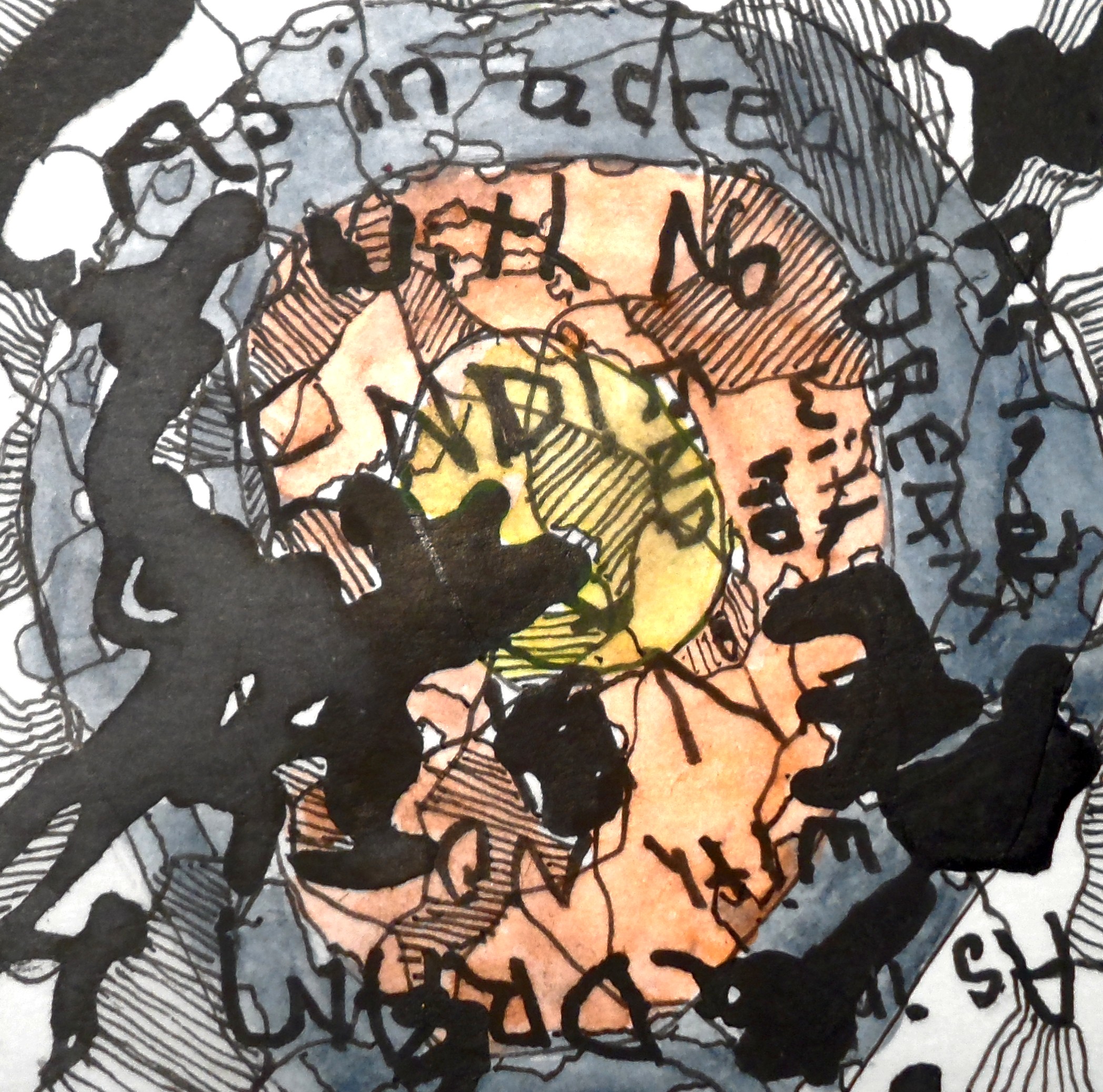
 Jacob Russell's Magic Names