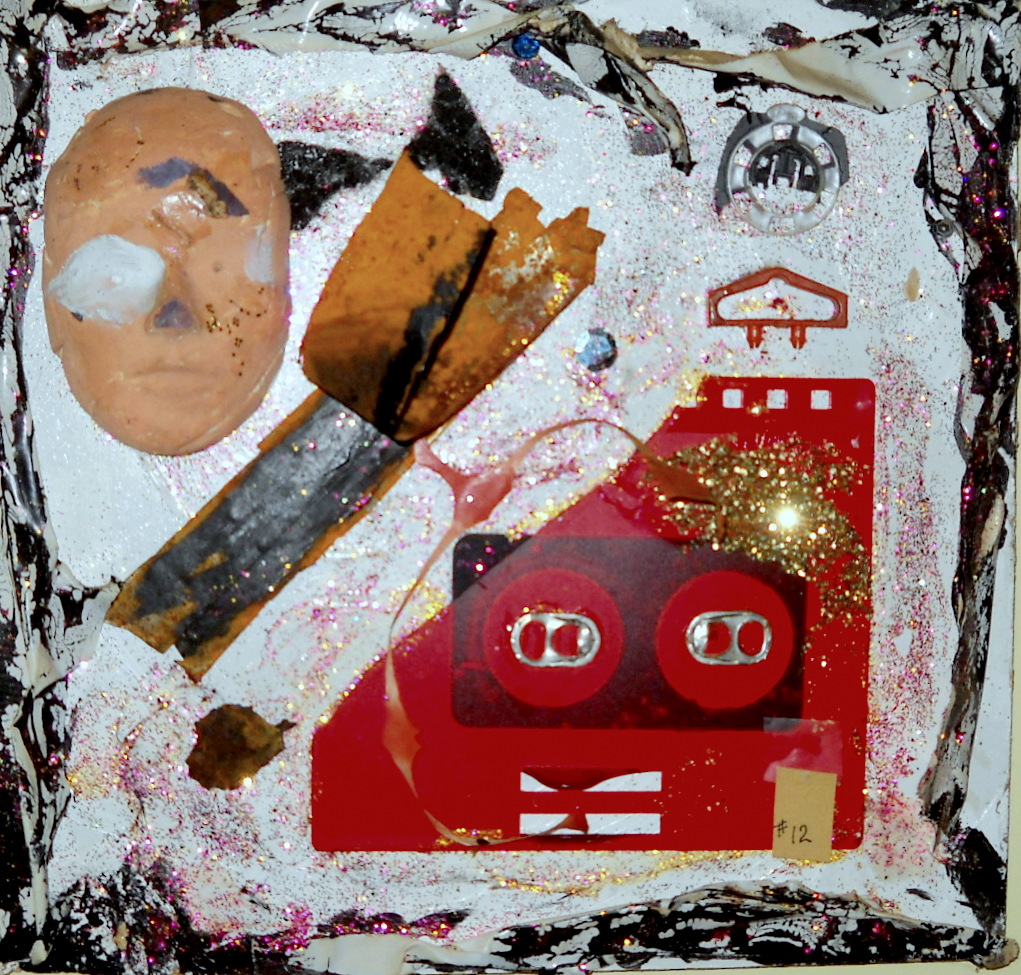
Camus’ question in the Myth of Sisyphus … there is no other way to begin the day. Every day.
Camus’ question in the Myth of Sisyphus … there is no other way to begin the day. Every day.
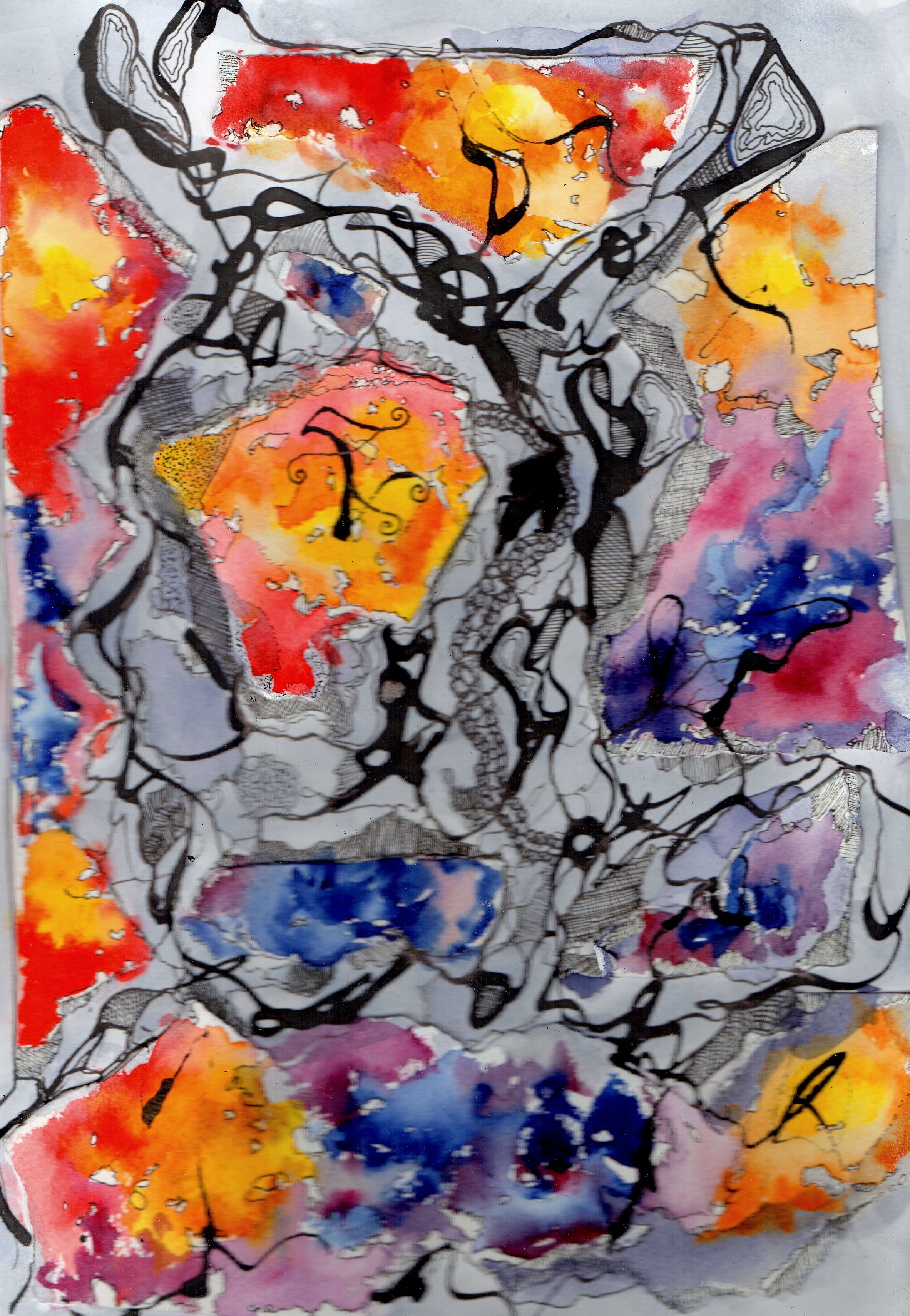
12″ x 9″ Ink, watercolor. Scraps of Arches cold press watercolor paper on # 234 Borden & Riley paper

View GALLERY HERE.
To say that a person or a class or people is oppressed by society is too simplistic. If we think of society as the totality of human beings, plus maybe institutions like schools, churches, and businesses created by human beings, we are using individual/society distinction, rather than thinking of society as global communication. In the traditional view, the individual is understood as the irreducible unit of society. Society is the whole and individual people are the parts. The individual then is understood as alienated from society, oppressed by society, indoctrinated by society, struggling for liberation from society, an integral member of society, or placed in some other relation to society.
But these are all observations. So the question becomes, What observer observes the individual as X? What observer observes the individual as alienated, oppressed, seeking liberation, or in some other relation to society?
We might say that a critical theory, religion, or…
View original post 336 more words

Be prepared to let the old version of your life pass away into the new life now being born. — Maryam Hasnaa (@thatgirlhas) November 3, 2016
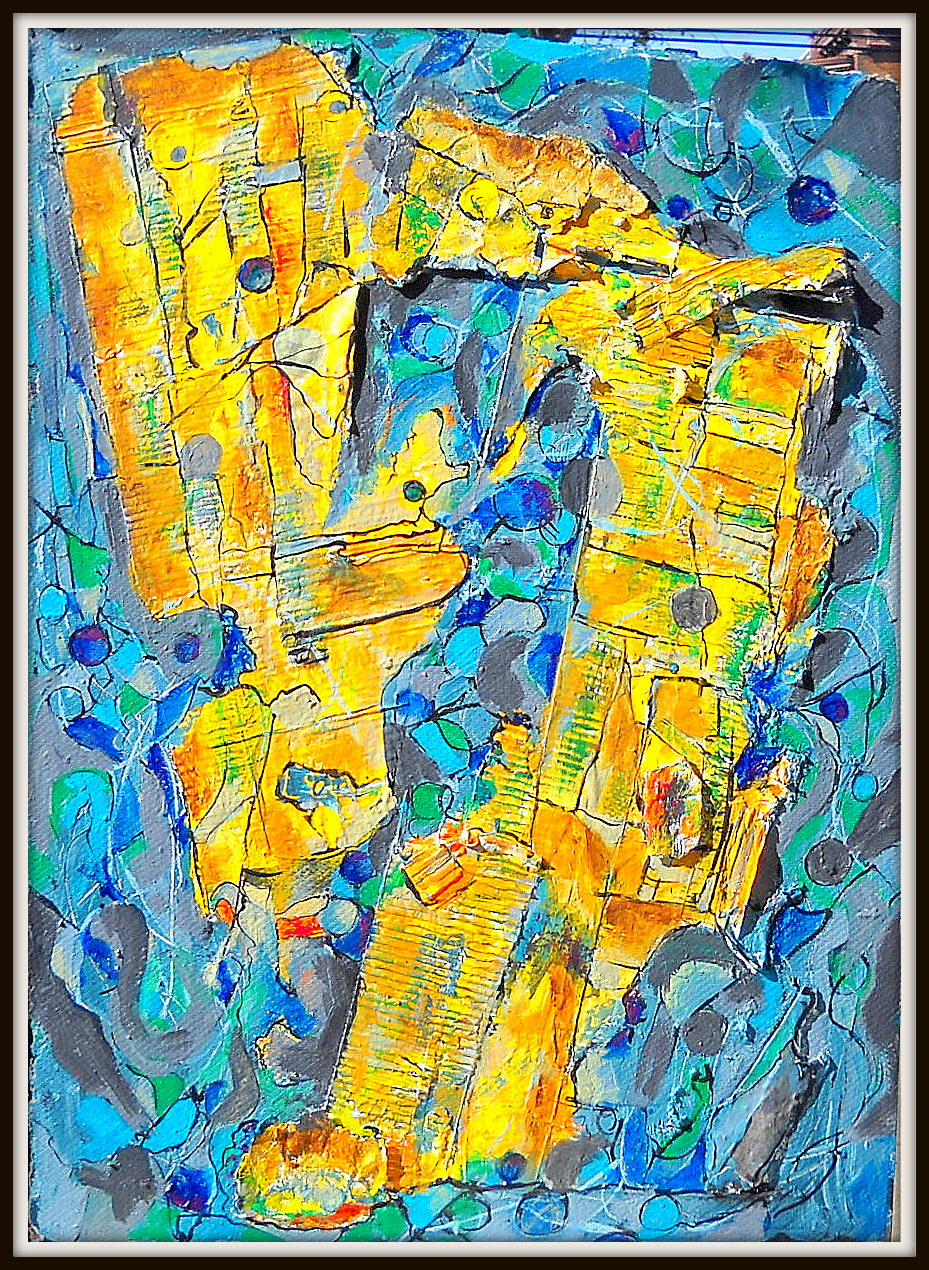
Paint over of #254 (see below). 57″ x 28″ Acrylic on Masonite and cardboard.
View GALLERY HERE.
#254 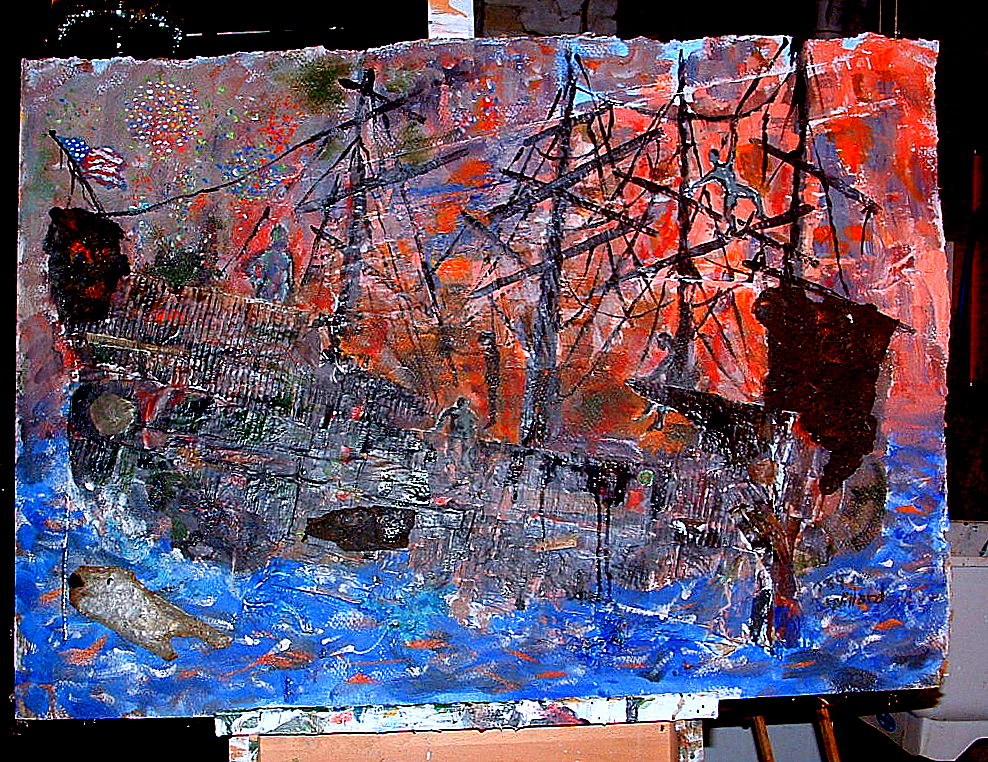
7.5″ x 9″ Fibrous scraps, ink, water color.

View GALLERY HERE.
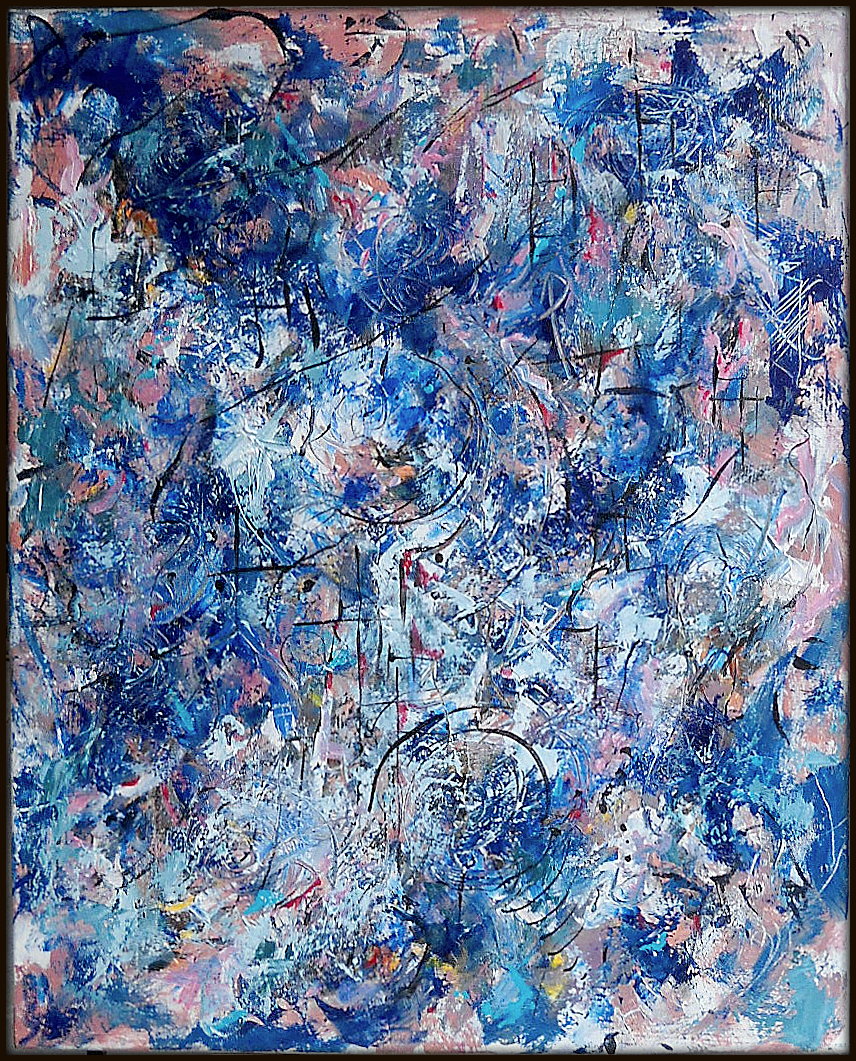
30″ x 24″ Acrylic on canvas. Paint-over of #578. The more I looked at that one, the more I disliked it.
View GALLERY HERE.
3 figures. 9″ x 11″ I’ve been thinking, that if I do a figure drawing session at Fleisher’s, I want to do something like this, superimposing several poses on a single sheet, sketch in pencil, than pen and ink, and move on to doing a series in acrylic.

View GALLERY HERE.
Religion observes through the form of transcendence/immanence. The “ground of all being” is transcendent; this is what we do not see or experience in daily life, but, according to the religion system, we can get a glimpse through the curtain in brief experiences of grace. The transcendent is the unmarked side of the form because it cannot be explained or described. It’s an empty space. Everyday experience is the marked side, and religion devotes itself to describing the sins, transgressions, corruptions on this side. It develops elaborate classifications of sins, such as mortal/venial, the seven deadly sins, etc. In other words, religion first distinguishes this world of sin and corruption, marking it off from the perfect transcendent reality. Then it re-enters the form on the marked side to make further distinctions among sins. So sins in general are distinguished as mortal (unforgivable) and venial (forgivable) sins. Venial sins are marked, and…
View original post 359 more words